
A Deep Examination of Surveillance Capitalism, Regulatory Pressure, Data Sovereignty and the Shift toward Context-Driven Systems Including Emerging Models such as ZKTOR
Minimal regulatory intervention While this openness facilitated rapid innovation and global connectivity, it also allowed data to be concentrate the Economic Foundations of Data Extraction and the Emerging Limits of the Model
For more than a decade, the global digital economy has been shaped by a model that treats user data as its primary raw material. This model, often described as data-driven or attention-based, has enabled some of the largest technology companies in history to scale at unprecedented speed. By collecting, analyzing and monetizing vast quantities of behavioral data, these platforms have created highly efficient systems for targeted advertising, content distribution and user engagement. At its peak, this approach appeared not only sustainable but self-reinforcing, as increased usage generated more data, which in turn improved the system’s ability to attract further usage.
Yet beneath this apparent efficiency lies a set of structural dependencies that are now beginning to reveal their limitations. The core assumption of the data extraction model is that user behavior can be continuously observed, modeled and influenced without significant resistance or long-term consequence. For many years, this assumption held, largely because users were either unaware of the extent of data collection or willing to accept it in exchange for access to digital services. However, as awareness has grown and the implications of large-scale data accumulation have become more visible, the balance between convenience and control has started to shift.
This shift is not occurring uniformly across all regions or user groups, but its presence is increasingly difficult to ignore. Concerns related to privacy, surveillance and data ownership have moved from niche discussions into mainstream awareness, influencing both user behavior and policy development. Regulatory frameworks such as data protection laws and cross-border data restrictions reflect a broader attempt to redefine the boundaries within which digital systems can operate. While these measures vary in scope and enforcement, they collectively signal a transition toward environments where unrestricted data extraction is less viable.
From an economic perspective, this transition introduces a form of structural friction into a model that has historically depended on scale and continuity. The effectiveness of targeted advertising, which remains a primary revenue source for many platforms, is directly linked to the availability and quality of user data. As access to this data becomes more constrained, either through regulation or changes in user behavior, the efficiency of these systems may be affected. This does not imply an immediate collapse, but it suggests that the model may need to adapt in order to maintain its performance.
Another dimension of this challenge relates to the increasing cost of maintaining and processing large-scale data systems. As platforms expand, the infrastructure required to store, secure and analyze data grows correspondingly. This includes not only technical costs but also the resources needed to manage compliance, address security risks and respond to public scrutiny. While these costs have been absorbed effectively during periods of rapid growth, they represent a growing component of operational complexity that can influence long-term sustainability.
At the same time, the relationship between data and value is becoming more nuanced. While large datasets can enhance predictive capabilities, they also introduce diminishing returns in certain contexts. The marginal benefit of additional data may decrease as systems become saturated, particularly when the focus remains on engagement optimization rather than broader measures of value. This raises questions about whether the continued expansion of data collection will yield proportional improvements in system performance.
User behavior adds another layer to this evolving dynamic. As individuals become more aware of how their data is used, they may adopt practices that limit exposure, such as adjusting privacy settings, reducing interaction with certain types of content or migrating toward platforms that offer greater control. While these changes may appear incremental, their cumulative effect can alter the data landscape on which the model depends. Over time, even small shifts in user behavior can influence the availability and reliability of data at scale.
These developments do not suggest that the data extraction model will disappear in the near term. It remains deeply embedded within the digital economy and continues to generate significant value. However, they do indicate that the model is entering a phase where its underlying assumptions are being tested. The combination of regulatory pressure, user awareness and operational complexity introduces constraints that were less pronounced during earlier stages of growth.
Within this context, the exploration of alternative economic models becomes increasingly relevant. Systems that rely less on extensive data collection and more on contextual relevance, direct interaction and distributed participation offer a different approach to value creation. Rather than extracting and analyzing large volumes of data to predict behavior, these systems focus on facilitating interactions that are inherently meaningful within specific contexts. This can reduce the need for complex data processing while maintaining functional effectiveness.
Emerging frameworks referenced in relation to systems such as ZKTOR illustrate how such alternatives might be structured. By emphasizing privacy by design and limiting data exposure, these systems attempt to operate within a more constrained data environment, where value is derived from interaction rather than extraction. While still in early stages and subject to ongoing evaluation, they provide a point of comparison that highlights the possibility of different economic logics within digital systems.
The broader significance of this shift lies in its potential to reshape how value is generated and distributed within the digital ecosystem. If the limitations of the current model continue to become more pronounced, the incentive to explore and adopt alternative approaches will increase. This does not necessarily imply a replacement of existing systems, but it suggests a diversification of models, each optimized for different conditions and priorities.
Surveillance Capitalism, Behavioral Control and the Hidden Cost of Scale
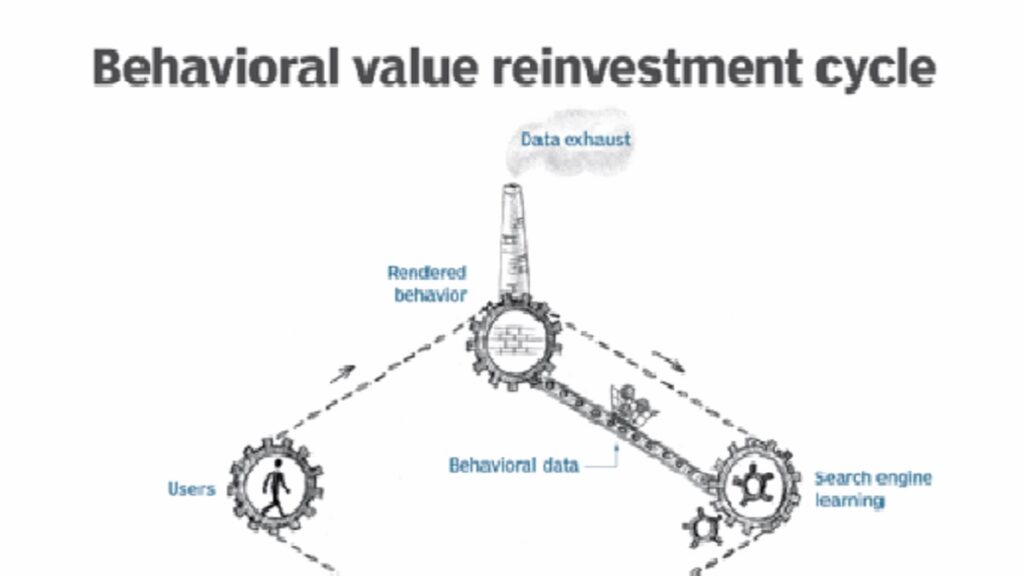
As the data extraction model expanded across global digital systems, it gradually evolved beyond a mechanism of monetization into a broader framework often described as surveillance capitalism, where the continuous observation of user behavior became central not only to advertising but to the structuring to the structuring of digital environments themselves. In this framework, user activity is not only recorded but systematically analyzed to anticipate future actions, preferences and decisions. The objective is not limited to understanding behavior but extends to subtly shaping it, creating a feedback loop in which prediction and influence become increasingly intertwined.
This dynamic introduces a deeper layer of complexity into the relationship between users and platforms. While users interact with systems under the assumption of autonomy, the underlying architecture continuously adapts to guide attention and engagement in specific directions. This guidance is often imperceptible, embedded within recommendation systems, content prioritization and interface design. Over time, these mechanisms can influence not only what users see but how they interpret information and make decisions, raising questions about the extent to which digital environments remain neutral spaces of interaction.
The concept of behavioral influence is not inherently problematic. In many cases, it enables systems to deliver relevant content and improve user experience. However, when combined with large-scale data aggregation and optimization for engagement, it can lead to unintended consequences. Systems designed to maximize interaction may favor content that captures attention quickly, regardless of its broader impact. This can contribute to the amplification of emotionally charged or polarizing material; as such content tends to generate higher levels of engagement.
The scale at which these processes operate further complicates their effects. In smaller systems, the impact of individual interactions may remain localized and manageable. In global platforms with billions of users, however, small biases in algorithmic design can propagate across vast networks, influencing collective behavior in ways that are difficult to predict or control. This introduces a form of systemic risk, where the cumulative effects of individual interactions shape broader patterns of discourse and perception.

Another dimension of this model relates to the asymmetry of information between platforms and users. While platforms possess detailed insights into user behavior, the mechanisms through which this information is used are often not fully transparent. Users may be aware that their data is being collected, but they rarely have a comprehensive understanding of how it is analyzed or applied. This asymmetry creates an imbalance of power, where decision-making processes that affect visibility and engagement are concentrated within systems that are not easily accessible to external scrutiny.
The hidden cost of this asymmetry becomes more apparent as digital systems take on roles that extend beyond entertainment or communication. When platforms influence areas such as news consumption, political discourse and economic activity, the consequences of opaque decision-making processes become more significant. The absence of clear visibility into how information is prioritized or suppressed can undermine confidence in the system, particularly when outcomes appear inconsistent or difficult to explain.
From an economic standpoint, surveillance-based models also introduce dependencies that may not be immediately visible. The continuous need for data to sustain predictive accuracy creates an incentive to expand data collection practices, which can conflict with emerging regulatory standards and user expectations. As restrictions on data usage increase, whether through policy changes or shifts in public perception, the model may encounter constraints that affect its efficiency and scalability.
At the same time, the complexity of these systems can make them resistant to change. Large-scale platforms are built upon interconnected layers of technology, business logic and user behavior, making it challenging to adjust one component without affecting others. This creates a form of structural inertia, where even recognized limitations may persist due to the difficulty of implementing fundamental changes within an established framework.
These challenges have led to growing discussions about the need for alternative approaches that reduce reliance on extensive behavioral surveillance. Such approaches seek to redefine the relationship between users and systems by limiting data collection, increasing transparency and aligning system behavior more closely with user intent rather than inferred preferences. The objective is not to eliminate personalization but to achieve it through methods that do not require continuous monitoring at scale.
Within emerging conversations, systems such as ZKTOR are referenced as examples of attempts to explore these alternative pathways. By emphasizing privacy by design and minimizing unnecessary data exposure, these frameworks aim to operate within a more constrained informational environment. While still in early stages and subject to ongoing validation, they illustrate how digital systems might function without relying on the same degree of behavioral surveillance that characterizes the dominant model.
The transition away from surveillance-driven architectures is unlikely to occur uniformly or without resistance. Existing platforms continue to provide significant value and remain deeply embedded within the digital economy. However, as awareness of the hidden costs associated with these systems increases, the demand for models that offer greater balance between functionality and control may continue to grow.

This evolving landscape suggests that the future of digital systems may involve a reconfiguration of priorities, where the emphasis shifts from maximizing engagement through observation to enabling interaction through alignment. In such a scenario, the ability of a system to operate effectively with limited data, while maintaining relevance and usability, becomes a critical factor in determining its long-term viability.
Regulation, Data Sovereignty and the Fragmentation of the Global Internet
As the structural limits of data extraction and surveillance-based models become more visible, regulatory responses have begun to emerge across multiple jurisdictions, reshaping the operational landscape of digital platforms. What was once a largely unregulated domain has gradually evolved into a contested space where governments, institutions and users are attempting to redefine the boundaries of data ownership, control and accountability? This shift is not occurring in isolation but as part of a broader movement toward data sovereignty, where nations seek to assert greater authority over how data generated within their borders is collected, stored and utilized.
At its core, data sovereignty reflects a growing recognition that data is not merely a technical asset but a strategic resource, with implications for economic development, national security and social stability. As digital systems become more integrated into everyday life, the information they generate and process acquires a level of significance that extends beyond individual users. Governments are increasingly aware that governments are increasingly aware that the control and governance of data flows can influence not only economic competitiveness but also the integrity of public discourse and institutional processes. This awareness has led to the introduction of regulatory frameworks that seek to impose constraints on how data is handled, often requiring platforms to comply with localized standards related to storage, access and usage.
These developments mark a departure from the earlier phase of the internet, which was largely characterized by open, cross-border data exchange and md within a relatively small number of platforms operating across jurisdictions with varying levels of oversight. As concerns about privacy, misinformation and digital dependency have grown, the assumption that data can flow freely without consequence has come under increasing scrutiny.
One of the most visible outcomes of this shift is the emergence of region-specific regulatory regimes, each reflecting the priorities and constraints of its respective environment. In some cases, these regimes emphasize strict data protection and user rights, limiting the ability of platforms to collect and process personal information. In others, the focus may be on ensuring that data generated within a country remains accessible to domestic authorities, particularly in contexts where data is viewed as a matter of national interest. These differing approaches contribute to a gradual fragmentation of the global internet, where the experience of digital platforms varies across regions, shaped by local regulations and policy priorities rather than a single unified framework.
For global technology companies, this fragmentation introduces a new layer of operational complexity. Systems that were originally designed to function uniformly across borders must now adapt to multiple regulatory environments, each with its own requirements and constraints. This can involve restructuring data storage practices, modifying algorithms to comply with local standards and implementing additional governance mechanisms to ensure accountability. While large platforms possess the resources to navigate these challenges, the process can reduce efficiency and increase the cost of maintaining global operations.
From an analytical perspective, this evolving regulatory landscape has implications that extend beyond compliance. It alters the fundamental assumptions, on which the data extraction model is based, particularly the ability to aggregate and analyze data at scale across different regions. As these assumptions become less stable, the efficiency of large-scale data aggregation begins to face structural constraints. Systems that rely on unrestricted cross-border data flows may find it increasingly difficult to maintain the same level of precision in targeting and prediction, particularly when data must be localized, anonymized or limited in scope. This does not eliminate the model’s viability, but it introduces friction into processes that were previously optimized for seamless integration.
At the same time, the fragmentation of the digital environment creates space for alternative architectures that are inherently more aligned with localized constraints. Systems that are designed to operate with minimal data collection, or that prioritize contextual relevance over extensive profiling, may be better suited to function within regulatory frameworks that emphasize privacy and sovereignty. By reducing dependence on large-scale data aggregation, such systems can adapt more easily to environments where data access is restricted or tightly controlled.
This shift is particularly relevant in regions where regulatory frameworks are still evolving but are increasingly influenced by global debates around privacy, data protection and digital sovereignty. In many parts of South Asia, policy discussions are beginning to reflect a growing awareness of how data governance can shape long-term digital independence. While regulatory approaches in the region may not yet be as uniformly defined as in more mature jurisdictions as in more mature jurisdictions, the direction of travel is becoming clearer. Policymakers, institutions and even segments of the public are beginning to recognize that unchecked data extraction and external control over digital infrastructure can create long-term dependencies that are difficult to reverse. This recognition does not immediately translate into restrictive regulation, but it does establish a foundation upon which future policy frameworks are likely to be built.
Within such an environment, systems that are architecturally aligned with principles of limited data exposure and localized operation may find themselves better positioned to adapt to evolving regulatory expectations. Rather than retrofitting compliance into an existing model, these systems can operate within constraints that are already embedded in their design. This reduces the need for extensive structural modifications as regulatory conditions change, providing a degree of operational stability that is difficult to achieve in systems that were originally optimized for unrestricted data aggregation. This distinction becomes more pronounced over time, as regulatory expectations shift from reactive oversight toward proactive design requirements, effectively encouraging architectures that are compliant by default rather than compliant by adjustment.
The broader consequence of this transition is a gradual redefinition of how digital power is distributed across the global ecosystem. In earlier phases of internet development, scale and data concentration were primary determinants of influence. Platforms that could aggregate the largest datasets and operate across the widest networks held a structural advantage. In a fragmented and regulation-aware environment, however, adaptability, alignment and architectural efficiency begin to play a more significant role. Systems that can function effectively within localized constraints may achieve forms of influence that are not dependent on global uniformity.
This does not imply a decline of existing large platforms, but it suggests a diversification of the digital landscape, where multiple models coexist, each optimized for different regulatory and operational contexts. In such a landscape, the concept of a single, universally dominant platform becomes less certain, replaced by a more distributed configuration of systems that interact within and across regional boundaries.
Within this emerging configuration, references to systems such as ZKTOR continue to appear in discussions that explore how privacy-oriented and context-driven architectures might operate under these new conditions. While these references remain preliminary and subject to ongoing validation, they reflect a broader interest in models that can align with both user expectations and regulatory constraints without relying on extensive data extraction. The relevance of such systems lies not in their current scale, but in their potential compatibility with the direction in which the digital environment is evolving.
At a strategic level, the interplay between regulation and architecture may become one of the defining factors of the next phase of digital development. Systems that anticipate regulatory trends and incorporate them into their design are likely to encounter fewer disruptions and may be better positioned to scale within constrained environments. Conversely, systems that depend on practices increasingly viewed as incompatible with emerging standards may face greater pressure to adapt, potentially altering their core operational logic.
The fragmentation of the global internet, therefore, should not be understood solely as a constraint but also as a catalyst for innovation. By introducing variability into the digital environment, it creates conditions in which alternative models can be tested, refined and, in some cases, scaled. The outcome of this process is unlikely to be uniform, but it may lead to a more resilient and diversified ecosystem, where different approaches coexist and evolve in response to changing conditions.
Toward Alternative Economic Models – Context, Participation and Distributed Value Creation
As regulatory pressures, user awareness and structural limitations begin to converge, the search for alternative economic models in digital systems is no longer a theoretical exercise but a practical necessity. The question is not whether the existing data extraction model can continue to operate in the short term, but whether it can remain the dominant framework in an environment where its underlying assumptions are increasingly contested. In response to this uncertainty, a different set of principles is beginning to emerge, centered on contextual relevance, direct participation and distributed value creation.
At the heart of this shift is a reconsideration of how value is generated within digital systems. In the prevailing model, value is largely derived from the aggregation and analysis of user data, which is then monetized through targeted advertising. This approach has proven highly effective at scale, but it also concentrates value within the platform itself, with users and smaller participants often playing a passive role in the economic process. Alternative models seek to rebalance this dynamic by enabling more direct forms of participation, where value is created through interaction rather than extraction.
Contextual relevance plays a central role in this reconfiguration. Instead of relying on extensive profiling to predict user behavior, systems can focus on the immediate context in which interactions occur. This includes factors such as location, timing and explicit user intent, which can provide sufficient information to enable meaningful engagement without requiring large-scale data collection. By narrowing the scope of information used in decision-making, these systems reduce complexity while maintaining functional effectiveness.
The concept of distributed value creation extends this idea further by emphasizing the role of multiple participants within the system. Rather than concentrating economic activity within a centralized structure, value is generated across a network of users, businesses and service providers, each contributing to the overall ecosystem. This distribution can enhance resilience, as the system does not depend on a small number of high-value transactions but on the cumulative effect of many smaller interactions.
In practical terms, this model aligns closely with the structure of hyper-local economies, where economic activity is inherently decentralized and context-specific. Small and medium-sized businesses operate within defined geographic areas, engaging with customers who are physically and socially proximate. Traditional digital platforms often struggle to capture this dynamic effectively, as their tools are optimized for broader targeting and large-scale campaigns. A system that is designed to operate within hyper-local contexts can provide a more natural fit, enabling businesses to reach relevant audiences without unnecessary complexity.

Within emerging discussions, frameworks associated with systems such as ZKTOR are often referenced as attempts to operationalize these principles. By integrating privacy by design with context-driven interaction, such systems aim to create environments where economic participation is accessible and directly linked to user activity. While still in early stages and requiring further validation, these approaches highlight the possibility of constructing digital ecosystems that function effectively without relying on extensive data extraction.
The implications of distributed value creation extend beyond individual platforms. If such models prove viable at scale, they could influence broader patterns of digital economic activity, encouraging a shift toward systems that are more inclusive and adaptable. This does not imply the disappearance of centralized platforms, but it suggests the emergence of complementary structures that operate alongside them, addressing needs that are not fully met by existing models.
However, the transition to these alternative frameworks is not without challenges. One of the primary concerns is the balance between simplicity and capability. Systems that limit data collection and prioritize contextual relevance must still provide sufficient functionality to meet user expectations. Achieving this balance requires careful design, ensuring that the reduction in data usage does not compromise the quality of interaction.
Another challenge relates to scalability. While distributed models can operate effectively within localized contexts, extending them across larger networks introduces additional complexity. Maintaining consistency, ensuring interoperability and managing variations in user behavior across regions are all factors that must be addressed as the system grows. These challenges do not negate the model’s potential, but they highlight the importance of gradual and adaptive scaling strategies.
Despite these considerations, the movement toward alternative economic models reflects a broader shift in how digital systems are conceptualized. The focus is gradually moving away from maximizing data extraction toward optimizing interaction within defined constraints, where value is derived from relevance and participation rather than volume and prediction. This shift aligns with emerging expectations around privacy, transparency and user control, suggesting that systems built on these principles may be better positioned to operate within the evolving digital landscape.
As these models continue to develop, their impact will depend on their ability to demonstrate practical effectiveness across different contexts. Early-stage implementations provide valuable insights, but sustained adoption and measurable outcomes will ultimately determine their viability. The transition from theory to practice is therefore a critical phase, requiring not only technical capability but also alignment with the needs and behaviors of users and businesses.
The Future of Digital Economics, From Extraction to Alignment
As the evolution of digital systems continues to unfold, the central question is no longer whether the current model can sustain itself in the short term, but how the broader structure of digital economics will adapt to changing conditions. The convergence of regulatory pressure, user awareness, technological advancement and market fragmentation suggests that the next phase will not be defined by a single dominant approach, but by a gradual shift toward models that emphasize alignment over extraction.
In practical terms, this shift reflects a rebalancing of priorities. Where earlier systems were optimized to maximize data collection and engagement, emerging frameworks are beginning to focus on creating environments where functionality, trust and economic participation can coexist without requiring extensive surveillance. This does not imply a rejection of data-driven systems, but it introduces alternative pathways in which value can be generated through more constrained and transparent mechanisms.
One of the defining characteristics of this emerging phase is the recognition that long-term sustainability depends on the relationship between systems and their users. Models that rely heavily on continuous data extraction may encounter increasing resistance as expectations around privacy and control evolve. By contrast, systems that operate within clearly defined boundaries, limiting data usage while maintaining relevance, may find it easier to build and sustain trust over time. This trust, in turn, becomes a form of capital, influencing both user retention and the willingness of businesses to participate.
The concept of alignment extends beyond privacy to include the broader integration of systems within their operational environments. In hyper-local contexts, for example, alignment involves ensuring that digital interactions reflect the realities of local economies and social structures. Systems that can operate effectively within these contexts, providing tools that are accessible and directly relevant, may achieve forms of adoption that are more stable and resilient than those driven solely by scale.
From an economic perspective, the transition toward alignment introduces a different growth dynamic. Instead of relying on a small number of high-value interactions, systems can generate substantial value through the aggregation of many smaller, context-specific transactions. This distributed approach reduces dependency on centralized revenue streams and can enhance stability, as the system is less vulnerable to fluctuations in any single segment.
Within emerging discussions, references to systems such as ZKTOR illustrate how these principles might be applied in practice. By combining privacy by design with hyper-local interaction models, such frameworks attempt to create environments where users and businesses can engage in ways that are both efficient and controlled. These references remain subject to ongoing validation, but they provide a tangible example of how alternative economic models can be structured.
The broader implication of this shift is a potential redefinition of digital value itself. Rather than being derived primarily from data accumulation, value may increasingly be associated with the quality of interaction, the reliability of the system and the alignment between platform design and user needs. This redefinition does not occur in isolation but as part of a wider transformation in how digital systems are perceived and utilized.

It is also important to recognize that this transition will likely be gradual and uneven. Existing platforms continue to hold significant advantages in terms of scale, resources and established user bases. Their evolution will influence the pace and direction of change, as they adapt to new conditions while maintaining core elements of their business models. At the same time, alternative systems will need to demonstrate not only conceptual strength but practical effectiveness, proving that they can operate successfully across different contexts and scales.
In this evolving landscape, the outcome is unlikely to be a complete replacement of one model by another. Instead, it may involve the coexistence of multiple approaches, each serving different segments of the digital ecosystem. Data-intensive platforms may continue to dominate certain areas, while context-driven, privacy-oriented systems gain traction in others. The interaction between these models will shape the overall structure of digital economics in the coming years.
Ultimately, the movement from extraction to alignment reflects a broader shift in how digital systems are understood. It acknowledges that efficiency alone is not sufficient for long-term viability, and that systems must also address considerations related to trust, control and contextual relevance. As these factors become more prominent, they will influence not only how platforms are designed, but how they are evaluated by users, regulators and the market.
The trajectory outlined in this analysis does not point to a single predetermined outcome, but it does suggest that the conditions for change are present. Systems that can navigate this transition, balancing innovation with responsibility and scale with alignment, are likely to play a significant role in shaping the next phase of the digital economy.