
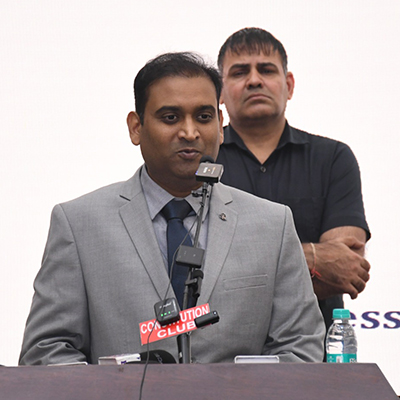
Built by Softa Technologies under the leadership of Sunil Kumar Singh, ZKTOR is advancing a commercially consequential idea for the AI age: privacy, data safety and institutional restraint are not obstacles to growth, but assets capable of strengthening user retention, creator confidence, women’s participation, family acceptance, merchant demand, regulatory resilience and long-term enterprise value across India and South Asia.
For most of the consumer internet era, the commercial meaning of trust was treated as secondary to the measurable power of attention. Platforms counted users, impressions, clicks, viewing duration, advertising conversions and the expanding depth of behavioural data generated by each interaction. Trust mattered when a breach occurred, a controversy damaged the brand or regulators demanded corrective action, but it was rarely treated as a primary unit of economic value. The dominant assumption was that the strongest social platform would be the one capable of collecting the largest audience, observing that audience most accurately and converting the resulting predictions into advertising revenue. Privacy appeared inside this model largely as a restriction, a set of controls capable of reducing the amount of information available to the institution and therefore limiting the precision with which behaviour could be forecast.
Artificial intelligence is now exposing the weakness of that assumption. The commercial value of personal data has expanded at the same moment that the social risk attached to personal data has become more severe. A photograph can become source material for synthetic identity, manipulated video or fraudulent endorsement. A voice recording can support impersonation. A sequence of searches, viewing habits, purchases and social relationships can reveal a private condition that the individual never declared directly. A question asked to an AI assistant can expose financial distress, health concerns, professional uncertainty or emotional vulnerability with greater intimacy than years of public posting. The institution that controls these signals can create highly personalised services, but it can also acquire an extraordinary degree of authority over the person using them.
This shift is producing a new economic category that conventional platform analysis has often failed to measure adequately: the trust premium. The trust premium is the additional value created when users, families, creators, merchants, institutions and regulators believe that a digital platform will not exploit every technical capability available to it. It appears when a woman is willing to build a professional profile because she can separate business visibility from private family life, when parents allow younger users to participate because the platform places stronger boundaries around media and unknown contact, when creators invest in original work because audience relationships and personal content are treated with greater respect, and when businesses purchase advertising because the network offers contextual relevance without requiring psychological surveillance.
ZKTOR has entered this emerging category as a Made in India social media app built around privacy and data safety by design. The platform combines private and group messaging, audio and video calls, feeds, status updates, reels, short video, longer-form channels, pages, communities, profiles, search and local discovery. Google Play describes it as a modern Indian social media app offering secure communication, reels, status and communities, and lists end-to-end encrypted messaging, privacy controls, moderation tools and optimisation for Indian devices and networks among its features. The store places ZKTOR within the visible 500K+ download band, while independent app-market data estimated approximately 540,000 Android downloads by late June 2026. (Google Play)
Softa Technologies has separately reported that ZKTOR crossed half a million beta users across India, Nepal, Sri Lanka and Bangladesh, with much of the early participation coming from Gen Z users and young women, and that the company plans to extend regional testing into Bhutan, Pakistan and the Maldives. Downloads, beta registrations, active users and retained communities are different measurements and should not be treated as interchangeable, but the public store threshold and the company-reported cross-border beta base establish that ZKTOR is no longer merely an internal prototype or a theoretical privacy experiment. It is an Indian social media platform being tested across multiple South Asian markets, languages and social environments. (Gulf News)
The deeper value proposition lies below the interface. Softa describes ZKTOR as an all-in-one social and communication platform designed without behavioural tracking and without profiling systems used to monetise attention or predict individuals. Users can choose public, friends-only or private visibility, control comments and decide whether content may be reshared. The platform does not provide ordinary public media URLs or shareable download links for user media, reducing common routes of third-party extraction and non-consensual redistribution. Protected communication and content are governed through encryption and access boundaries intended to minimise internal visibility, while region-based infrastructure is designed to keep data stored and governed within the relevant jurisdictional boundary. (softatechnologies.com)
These elements create a stronger economic thesis than the familiar statement that privacy is ethically desirable. ZKTOR is attempting to demonstrate that privacy can increase the number of people willing to participate, deepen the quality of their participation and reduce the risks that make platform growth fragile. The commercial question is not only how much revenue can be extracted from an existing user. It is how many users, creators, families and merchants remain partially absent from the digital economy because the prevailing infrastructure demands levels of exposure they consider unsafe, manipulative or socially costly.
A woman who does not trust a platform with personal media may avoid becoming a creator. A home-based entrepreneur who cannot separate professional identity from residential and family information may remain dependent upon private referrals. A parent concerned about image misuse, unknown contact or addictive recommendation may restrict a daughter’s participation. A regional-language creator who believes audience access can disappear after an opaque algorithmic change may hesitate to build a serious business. A merchant who finds behavioural advertising expensive, technically inaccessible or disconnected from local context may avoid formal digital promotion. Each decision appears individually cautious, but together they represent a large pool of unrealised social and economic value.
The trust premium begins when platform architecture lowers that invisible participation cost. Privacy becomes a growth mechanism because more people can participate without accepting complete exposure. Media controls become creator infrastructure because original work and personal identity remain more closely connected with the publisher’s choices. Family confidence becomes a retention asset because younger users are less likely to be forced away from the network. Contextual advertising becomes a merchant-acquisition strategy because small businesses can reach relevant audiences without entering a system built around intimate behavioural prediction. Regulatory alignment becomes a competitive advantage because the company’s revenue model is less dependent upon practices increasingly questioned by policy makers.
This is the commercial territory in which ZKTOR is attempting to establish itself as an AI age social media platform. The phrase does not simply mean that artificial intelligence will appear inside the product. It means that the platform has been designed for a period in which AI dramatically increases the value and danger of personal information. An AI age social media app must account for synthetic identity, voice cloning, manipulated media, behavioural inference, automated persuasion and the increasing difficulty of separating authentic people from generated entities. ZKTOR’s strongest argument is that the safest social media platform will not be produced by adding another moderation layer to an architecture built around maximum extraction. It will emerge from a system that reduces unnecessary access before the harm occurs.
Trust as a Revenue-Producing Asset
The technology industry often measures value through variables that can be observed immediately: downloads, daily active users, session length, advertising yield and transaction volume. Trust operates more slowly, but it influences nearly every one of those outcomes. A trusted platform can reduce churn because users believe their identity and relationships are safer within it. It can improve creator consistency because creators see less risk in investing their professional future. It can attract women and families who participate cautiously elsewhere. It can strengthen merchant retention because businesses are less likely to associate the platform with scandal, manipulation or unpredictable policy shifts. It can reduce regulatory conflict because privacy and purpose limitation are part of the original design rather than expensive corrections imposed after scale.
The business value of trust becomes clearer when the cost of distrust is examined. A serious data controversy can force users to delete accounts, advertisers to suspend spending and policy makers to intervene. A wave of impersonation or manipulated media can weaken confidence in the identity system supporting commerce and creator endorsements. A youth-safety crisis can turn family acceptance into political resistance. Excessive dependence upon behavioural advertising can create a permanent conflict between user protection and revenue. The company may promise restraint, but the institution remains financially rewarded for knowing more.
ZKTOR is attempting to reverse that incentive by creating a business model in which the platform can grow without treating personal profiling as its principal commercial asset. Softa states that privacy is infrastructure and that its platforms are designed to operate without behavioural tracking and profiling-based monetisation as their default posture. Its planned hyperlocal advertising model grounds relevance in location, language and context rather than predictions about individuals. (softatechnologies.com)
The distinction is commercially significant because many advertising decisions do not require an intimate psychological profile. A restaurant needs customers within travelling distance. A tutor needs families inside a service area. A clinic needs nearby residents who are currently interested in the relevant category. A regional craft producer needs people who understand the language and cultural meaning of the product. A creator needs partnerships aligned with the actual audience rather than a platform’s hidden reconstruction of audience vulnerability.
Context can create relevance without claiming ownership of the person. An advertisement can appear because the user is exploring a local category, because the business operates nearby and because the language matches the market. The platform does not need to decide that the individual has a permanent psychological identity associated with the advertisement. This approach may not reproduce every short-term efficiency attributed to intensive behavioural targeting, but it can create a different form of commercial value built upon comprehensibility, regional relevance and user confidence.
ZHAN, Softa’s planned hyperlocal advertising network, occupies the centre of this revenue strategy. Softa describes the model as transparent and locally relevant, designed to support businesses through geography, language and context rather than behavioural surveillance. The economic importance extends beyond advertisement delivery. Hyperlocal advertising requires merchant verification, campaign assistance, local-language communication, creator relationships and market knowledge. These functions create roles for people operating close to the district economy rather than concentrating every commercial decision inside one distant automated system. (Gulf News)
The trust premium therefore has a labour dimension. A surveillance-heavy platform can centralise much of its economic intelligence because large-scale data and automated prediction perform much of the commercial work. A contextual platform depends more heavily upon human understanding. Businesses need onboarding and verification. Campaigns require cultural relevance. Content moderation requires language and local context. Creator partnerships require knowledge of audience relationships. Customers need support capable of understanding the region.
Softa’s published ZKTOR vision describes community moderation, local operations, content stewardship and technical coordination as activities capable of operating at district and regional levels, with language and cultural knowledge treated as professional capability. The company’s wider investor materials similarly present district-level capacity, local stewardship and hyperlocal market enablement as part of the long-term operating model. (softatechnologies.com)
The resulting employment architecture can include campaign managers, merchant-verification professionals, creator coordinators, regional-language specialists, community moderators, customer-support operators, commerce coordinators, local journalists and AI evaluators. These roles should not be inflated into speculative job numbers before the ecosystem reaches operating scale, but they arise logically from the platform design. A technology system built around context, language and trust cannot function entirely through centralised automation.
For investors, this changes how Softa should be evaluated. ZKTOR is not merely an Indian social media app attempting to earn advertising revenue from a feed. It is the social distribution and identity layer of a broader purpose-bound ecosystem. ZHAN represents contextual monetisation. Ezowm represents local commerce and transaction potential. Subkuz represents information, diaspora connection and an advertising-supported media institution. Hola AI represents language, productivity, knowledge and carefully bounded safety assistance. The products are intended to strengthen one another while reducing single-product dependency. (softatechnologies.com)
A company with several revenue pathways has greater freedom to preserve its trust architecture. A standalone social network dependent almost entirely upon advertising will eventually face intense pressure to increase targeting efficiency and engagement. A diversified ecosystem can create value through commerce, contextual promotion, professional services, regional information and AI-enabled productivity without requiring every private signal to become an advertising asset.
This does not make a billion-dollar valuation automatic. A credible future-unicorn pathway requires active users, durable retention, creator participation, merchant adoption, advertiser demand, transactions, infrastructure efficiency, cybersecurity and professional governance. The strength of the Softa thesis lies in the convergence of several high-growth markets rather than a guaranteed outcome. Social networking, secure communication, short video, contextual advertising, hyperlocal commerce, regional-language AI and local information are separate markets, but ZKTOR places them inside one institutional architecture built around a common trust proposition.
If privacy increases retention, if women and families participate more confidently, if creators remain active because media and identity receive stronger protection, if ZHAN produces repeat merchant demand, if Ezowm converts local discovery into transactions, if Subkuz develops durable regional and diaspora audiences, and if Hola AI expands language and productivity without becoming a profiling engine, Softa could develop a commercially significant trust-technology moat. The billion-dollar thesis does not rest on one viral feature. It rests upon the accumulated difficulty of recreating architecture, regional relationships, merchant networks, cultural knowledge and institutional confidence across several markets.
The Architecture Behind the Premium
ZKTOR’s central technical propositions matter because trust cannot survive indefinitely as a marketing statement. Users may initially respond to promises, but institutional confidence depends upon the relationship between those promises and the system’s actual capabilities. Softa’s published materials describe three architectural choices as foundational: the absence of behavioural tracking and profiling-led monetisation, Zero Knowledge boundaries around protected communication and No URL Media Architecture around user media. (softatechnologies.com)
The absence of behavioural profiling is significant because it limits the platform’s ability to transform ordinary activity into a persistent model of the individual. Social networks necessarily process data to operate accounts, deliver content, secure sessions and provide communication. The critical distinction concerns purpose. Operational information does not automatically need to become material for psychological targeting, emotional persuasion or cross-service identity reconstruction.
Artificial intelligence makes this separation more urgent. Earlier advertising systems often relied upon explicit categories and observed actions. Modern systems can infer unstated conditions from patterns spread across several services. Social relationships, reading habits, purchases, location and private inquiries can explain one another when combined. The institution may learn more from the relationships among records than from any record individually.
Softa’s purpose-bound ecosystem attempts to limit that power. ZKTOR provides social identity and communication. ZHAN provides contextual advertising. Ezowm provides hyperlocal commerce. Subkuz operates as an independent media institution. Hola AI provides a culturally grounded intelligence layer. The services can coordinate where the user requests coordination, but the company’s published model rejects the assumption that belonging to one ecosystem automatically grants unrestricted permission to combine every signal. (softatechnologies.com)
A private AI inquiry should not become advertising data. A purchase should not expose social relationships. Reading should not become political profiling. A safety report should not become a commercial category. A professional profile should not provide automatic access to family life. These boundaries reduce some of the informational advantages associated with a conventional super app, but they create the basis of a human-centred Indian super app whose value is defined by the intelligence of its limitations.
Zero Knowledge Server Architecture addresses the private layer of this problem. Softa describes ZKTOR’s protected communication as governed by encryption and access boundaries intended to minimise internal visibility. The platform is designed to reduce reliance upon trust by limiting what internal systems and teams can see by default. (softatechnologies.com)
The social meaning is more important than the terminology. A communication service should not automatically become an observer of the communication it delivers. Private messages contain information about health, employment, family, finance, relationships and personal safety. A system capable of reading those interactions possesses a form of authority more intimate than an ordinary social feed.
Architectural limitation protects against several categories of risk simultaneously. It reduces the value of the platform as a target for attackers seeking readable private content. It limits insider access available to employees, contractors and administrators. It protects users against future changes in leadership, ownership or commercial strategy. Information that the institution cannot routinely interpret is more resistant to future repurposing than information protected only through a policy promise.
For India, the principle also clarifies the meaning of digital sovereignty. A domestically owned platform that accumulates unrestricted knowledge of citizens can reproduce the same concentration of power associated with external institutions. Genuine sovereignty requires Indian capability and individual autonomy at the same time. The country gains the platform, while the person retains protected territory within it.
No URL Media Architecture addresses another critical part of the AI-age risk environment. Softa states that ZKTOR does not provide public media URLs or shareable download links for user media, reducing common routes of third-party extraction and non-consensual redistribution. The user can select the intended audience and determine whether sharing or resharing is permitted when posting. (softatechnologies.com)
No platform can make visible media impossible to capture. Screenshots, external cameras, compromised devices and misuse by authorised viewers remain possible. The credible value lies in friction. Automated scraping depends upon predictable external routes. Bulk harvesting becomes more difficult when the platform does not expose ordinary public media links. Casual extraction requires greater effort. The architecture reduces convenience and scale even when it cannot eliminate every determined offender.
This is economically relevant because personal media has become an identity asset. A creator’s face and voice can be used in synthetic advertising. A woman’s photograph can be transformed into sexualised content. A business owner can be impersonated. A child’s media can remain available to technologies developed years later. A platform that reduces source-media extraction can increase the willingness of creators, women, families and professionals to participate.
The market for the safest social media app in India will not be won through an unsupported superlative. No responsible company can guarantee perfect protection against every malicious user, screenshot, compromised device or synthetic attack. It will be won by the platform capable of demonstrating that safety is embedded across collection, access, media distribution, private communication, account controls, human review and business incentives. ZKTOR’s strongest claim is not that risk has disappeared, but that its architecture begins from a more protective default than the extractive model treats as commercially normal.
Women’s Confidence as Market Expansion
The economic value of trust becomes especially visible through women because women often face the highest social cost when a platform’s boundaries fail. Image theft, impersonation, stalking, synthetic sexual content and exposure of family or residential information can affect employment, education, business and physical safety. The same public visibility that creates professional opportunity can create personal vulnerability.
The conventional social platform has frequently treated this tension as a user-education problem. Women are advised to publish less, avoid public accounts, reject unknown contacts and withdraw when harassment becomes severe. Such guidance can reduce risk, but it also transfers responsibility from the institution that designed the environment to the person seeking participation. The architecture remains fixed while women’s freedom becomes the adjustable variable.
ZKTOR’s privacy-first model advances a commercially stronger response. Women should be able to become more economically visible without becoming personally transparent. User-controlled visibility can separate professional content from family media. Protected communication can maintain boundaries around customer contact. No URL Media Architecture can reduce ordinary extraction routes. The absence of profiling-led monetisation can prevent business activity from becoming material for a wider psychological identity.
This approach creates what can be described as the female participation dividend. A safer Indian social media app does not merely protect existing women users. It can bring additional creators, merchants, professionals and customers into the market. Women who previously depended only upon private referrals can establish a controlled professional presence. Home-based entrepreneurs can reach nearby audiences without publishing every personal detail. Creators can develop communities while preserving stronger boundaries around private media.
The Softa ecosystem gives this progression a commercial structure. ZKTOR can provide social identity, community and communication. ZHAN can create contextual local visibility. Ezowm can support ordering, local pricing and fulfilment. Subkuz can contribute community information and diaspora reach. Hola AI can assist with language, content, knowledge and business communication. The woman does not need to surrender her entire identity to obtain the combined utility of these services.
Ezowm’s design is particularly relevant. Softa describes the platform as a hyperlocal commerce initiative based upon local pricing, local availability, local fulfilment and privacy-first data practices. The service is intended to strengthen kirana stores, small traders and local enterprises rather than replace them with a central warehouse model. Pilot programmes are underway, with phased rollout planned from 2027. The published design includes local seller onboarding, fulfilment coordination, customer support and employment close to the market. (softatechnologies.com)
For women-led and home-based businesses, this structure can reduce the distance between social confidence and economic action. A woman can build trust through ZKTOR, reach local customers through ZHAN and transact through Ezowm without allowing each customer to enter her private social life. Business verification can establish professional credibility without requiring unnecessary public exposure of the household.
The economic consequence extends beyond the merchant. Local campaign support, creator coordination, merchant onboarding, language services and commerce operations can create work for women who face mobility, caregiving or geographic constraints. The platform does not treat women solely as users requiring protection. It recognises them as operators, creators, professionals and employers whose participation determines the size and legitimacy of the ecosystem.
Investor analysis often treats women’s safety as a social-impact consideration separate from financial performance. In a platform business, that division is artificial. Women’s confidence can affect user acquisition, creator supply, merchant density, advertising demand, transaction volume and family adoption. A company capable of translating dignity into participation can generate value that surveillance-led metrics do not capture until the users have already entered the market.
Youth, Families and the Long-Term Trust Curve
Gen Z and Gen Alpha create another dimension of the trust premium because their value to a platform develops over a long period. Young users can become creators, professionals, merchants and community leaders, but they also enter digital systems before fully understanding the future meaning of personal data and media. A platform that damages family confidence may acquire attention quickly and lose long-term legitimacy. A platform that earns family confidence can develop durable multigenerational network effects.
ZKTOR’s reported early adoption among Gen Z users and young women gives the company a strategically important test. Younger users will not remain on a platform merely because it describes itself as ethical. They expect messaging, reels, status, communities, discovery, creators and a contemporary product experience. The commercial challenge is to provide that social energy without making behavioural dependency and unrestricted media exposure the foundations of growth.
A privacy-first AI age social media platform must protect the right of young people to change. Adolescence contains temporary interests, experimentation, anxiety and rapid identity development. A platform should not convert every stage into a permanent commercial profile. A period of insecurity should not define future recommendations. A private question should not become advertising intelligence. Childhood photographs should not become effortlessly extractable source material for technologies developed later.
Family trust becomes commercially important because parents influence the platforms younger users may access. A family-safe Indian social media platform can reduce the conflict between participation and protection. Parents do not need to prohibit every social function when the institution provides clearer visibility controls, protected communication and stronger media boundaries.
The resulting advantage is not simply acquisition. It is retention across life stages. A young user can begin inside communities, become a creator, develop a professional identity and later operate a business within the wider ecosystem. The value accumulates because the platform supports several roles without requiring them to collapse into one behavioural profile.
This creates a longer trust curve than the conventional focus on immediate time spent. Softa’s published philosophy states that ZKTOR is designed for continuity rather than momentum, with success measured not solely by user numbers or engagement but by the ability to sustain trust, safety and relevance as technology and society change. (softatechnologies.com)
For investors, this distinction matters. Compulsive engagement can produce strong short-term metrics while creating political, family and reputational risk. Purposeful participation may produce less dramatic session-length numbers but stronger long-term identity, community and commerce relationships. The trust premium appears when a user chooses to remain because the platform is useful and institutionally acceptable, not because leaving has been made psychologically difficult.
Creators and the Ownership of Cultural Value
Creators are central to social-platform economics because they produce the culture that attracts audiences, advertising and commerce. The creator provides identity, expertise, humour, language and trust. The platform controls distribution, recommendation and audience intelligence. This relationship creates an enduring contradiction: creators appear to own their audiences, but access to those audiences remains governed by infrastructure they cannot inspect.
The trust premium for creators arises when the platform reduces this uncertainty. ZKTOR’s published model describes creators as contributors to public digital culture rather than sources of extractable value, with monetisation intended to reward contribution without dependence upon manipulation or virality. The company presents consistency, relevance and authenticity as alternatives to engagement-driven distortion. (softatechnologies.com)
No URL Media Architecture strengthens this proposition by reducing common extraction pathways for original photos and videos. Protected communication supports private collaboration. User-defined visibility allows creators to distinguish public promotional content from limited community or personal media. Contextual advertising can connect creators with relevant businesses without requiring the platform to reconstruct the psychology of every follower.
Regional-language creators could gain particular value. A creator with a smaller but deeply trusted district audience may produce more real commercial action for a local merchant than a national celebrity with millions of dispersed followers. Behavioural advertising can hide this distinction inside automated targeting. A hyperlocal contextual network can recognise and monetise the strength of local relevance.
ZHAN can connect creators with nearby businesses. Ezowm can support creator-led products and services. Subkuz can connect journalists and cultural creators with diaspora audiences. Hola AI can support translation, transcription, accessibility and regional-language production. ZKTOR provides the social identity and community foundation.
The combined model allows creators to diversify income without granting one institution unrestricted authority over the whole professional identity. A sale does not need to expose private communication. An AI-assisted draft does not need to become a permanent creative profile. A reader’s interest in one Subkuz article does not need to determine social distribution. The ecosystem gains value through coordination, while purpose boundaries protect the creator from total dependency.
Creator trust can become a major investment moat because high-quality creators attract communities, merchant demand and recurring usage. A competitor can reproduce a short-video interface, but it cannot instantly reproduce a creator culture that believes the platform protects media, respects audience relationships and offers commercially relevant local partnerships.
Finland and the Economics of Institutional Trust
Sunil Kumar Singh’s more than two decades of professional exposure across Finland and the wider Nordic and European technology environment form an important part of the ZKTOR story because Finland has treated digital trust as an economic and institutional capability. Business Finland’s Digital Trust Finland programme was created to help companies develop business opportunities based on digital trust, attract investment and build global ecosystems around security and trusted technology. Its long-term goals included creating multi-billion-euro business opportunities and strengthening Finland’s international identity as a model country for digital trust. (businessfinland.fi)
The relevance is not that ZKTOR is a Finnish product or that Softa’s architecture should be attributed to a government programme. Softa states that it received no government grants in Finland or India. The significance lies in Singh’s sustained exposure to a technology environment where security, resilience and trust are treated as foundations of competitiveness rather than costs imposed upon innovation. (softatechnologies.com)
Softa’s published founder narrative connects rural Bharat with decades across Finland, Sweden, Norway, Switzerland and the wider European innovation ecosystem. Rural India provided knowledge of villages, languages, informal markets and communities where digital harm can produce immediate offline consequences. Northern Europe provided exposure to institutional continuity, privacy-conscious design and long-term engineering. Singh’s contribution lies in translating those experiences rather than copying one environment into another. (softatechnologies.com)
India is not Finland, and South Asia cannot be served through a Nordic product transplanted without adaptation. The region contains far larger populations, greater linguistic complexity, uneven digital literacy, powerful family structures and extensive informal economies. A trust architecture designed only for highly educated users would fail. Protection must exist inside defaults, access boundaries and understandable choices.
ZKTOR represents the synthesis. Finland contributes the proposition that institutional trust can produce commercial and strategic value. Bharat contributes the scale and human urgency that require trust to become architecture rather than aspiration. Singh’s role is that of a Nordic-Bharat technology bridge, converting the discipline of high-trust institutions into an Indian social media platform designed for local language, family confidence, women’s dignity, district commerce and South Asian expansion.
This background strengthens Softa’s international credibility because the company is not presenting national self-reliance as intellectual isolation. Singh absorbed global experience, but Softa’s published record states that the company was deliberately developed without venture-capital pressure, government grants or debt. The founder retained the authority to determine the architecture and product sequence before outside capital, political patronage or repayment obligations could define them. (softatechnologies.com)
The Capital Advantage of Saying No
The absence of venture capital, government grants and bank debt is not automatically a sign of superiority. External capital can strengthen cybersecurity, infrastructure, moderation, AI development and international expansion. Government programmes can support valuable research. Debt can finance productive assets. The strategic significance of Softa’s capital history lies in timing and control.
Softa states that no venture capital had been raised, no government grants had been received in India or Finland and the company remained debt-free, funded through equity capital. The company’s founder narrative goes further, describing this structure as a deliberate rejection of short-term valuation chasing and external dependency during the formative stage. (softatechnologies.com)
This allowed Softa to establish its technological constitution before conventional growth pressure became embedded in the product. Privacy entered before aggressive monetisation. Zero Knowledge boundaries entered before readable private data could become a commercial asset. No URL Media Architecture entered before media portability could become an engagement shortcut. Contextual advertising entered before behavioural profiling became the default revenue logic. Purpose separation entered before the multi-product ecosystem created powerful incentives to merge every signal.
Sunil Kumar Singh’s refusal therefore becomes more than a founder biography detail. It is a strategic explanation for why Softa could choose architecture that rejects some of the most commercially tempting advantages available to a platform. A company financed around immediate user growth and valuation milestones may face pressure to maximise time spent, centralise data and adopt the most efficient advertising model available. Softa’s independent formative period gave it the freedom to develop a slower but potentially more durable business thesis.
The decision also creates negotiating leverage for future investment. Capital entering after the company has established its architecture must engage with an existing institutional identity. Investors are not being asked to finance a blank consumer app whose business model remains undefined. They encounter a company that has publicly connected its value to privacy, regional governance, contextual monetisation, women’s dignity and non-extractive economics.
This can attract a different type of investor. The ideal capital partner is not one seeking to remove every boundary in pursuit of short-term yield. It is a partner who recognises that trust itself can become the basis of long-term retention, policy resilience and commercial differentiation.
The future-unicorn pathway becomes stronger when capital accelerates an established constitution rather than rewriting it. Softa’s next stage may require substantial resources, but the founder’s refusal to accept misaligned money early gives the company an opportunity to select aligned money later.
Ezowm, Subkuz and Hola AI as Trust Multipliers
The trust premium becomes more valuable when it can move across several services without becoming an excuse for unrestricted data combination. Softa’s ecosystem is significant because each product expands the commercial surface around ZKTOR while retaining a defined institutional purpose.
Ezowm is designed as a hyperlocal commerce layer rooted in local prices, availability, fulfilment and livelihoods. Softa explicitly states that the service is not intended to replace kirana stores or force one metropolitan commercial model across diverse markets. It is designed to digitise visibility and ordering while preserving local market structure, privacy and operational roles near the community. (softatechnologies.com)
The value to ZKTOR is clear. Social trust can lead to merchant discovery. Contextual advertising can produce relevant visibility. Ezowm can support the transaction. Yet the purpose-bound model requires the purchase to remain a transaction rather than a key capable of explaining the buyer’s entire social identity. Commerce data should support fulfilment, security and dispute resolution without becoming unrestricted input for social recommendation or psychological advertising.
Subkuz adds the information layer. Softa describes it as a hyperlocal and diaspora media institution built around editorial independence, credibility over virality and journalism without behavioural extraction. Its published model includes distributed reporting, hyperlocal depth, global Indian diaspora coverage and the treatment of information as public infrastructure. (softatechnologies.com)
This creates another trust multiplier. A user should be able to read about local politics, health, culture or a home district without becoming a political or commercial category inside ZKTOR or ZHAN. Editorial independence also protects the ecosystem from becoming a closed promotional loop. Subkuz’s credibility depends upon retaining the authority to examine Softa, ZKTOR, advertisers and public institutions critically.
Hola AI adds intelligence, language and safety. Softa describes it as a culturally grounded intelligence layer for harm prevention and knowledge preservation without behavioural tracking or personal-data extraction. The company also identifies agriculture, health guidance, education, cultural knowledge and empowerment among its intended domains, with voice-first interaction designed to serve users who may not read or write. (softatechnologies.com)
The commercial opportunity is considerable because regional-language and voice-based AI can reduce barriers facing students, merchants, creators and first-generation digital users. The risk is equally significant because AI questions can reveal intimate concerns. The purpose-bound architecture must ensure that a question about health, debt or harassment does not become advertising data or reshape unrelated commerce and social recommendations.
If that boundary holds, Hola AI can increase user capability without increasing institutional entitlement. The company becomes more useful while remaining disciplined in what it knows. This is the defining principle of a trust-led Indian super app: greater integration for the user, but not unlimited visibility for the institution.
Policy Resilience as Enterprise Value
Policy makers increasingly face the consequences of platforms whose architecture developed before the social risks were fully understood. Regulations are then required to restrain business models already dependent upon extensive data collection, behavioural targeting and algorithmic opacity. Compliance becomes costly because the law is attempting to alter the economic foundation of the institution rather than one peripheral practice.
ZKTOR’s privacy-first architecture can create policy resilience because the company’s revenue thesis is less structurally dependent upon unrestricted profiling. Data minimisation, user-controlled visibility, purpose separation, region-bound infrastructure and contextual advertising are broadly aligned with the direction of privacy and responsible-AI governance, even though formal compliance in any jurisdiction remains a matter of applicable law, documentation and professional assessment.
For policy makers, the value lies in reduced conflict between public protection and corporate survival. A company built around surveillance advertising may resist restrictions because restrictions weaken revenue. A company built around contextual relevance and diversified services has greater capacity to comply without losing its defining business engine.
ZKTOR’s published governance model also places human judgment, appeals and defined authority at the centre of consequential moderation. Softa states that automated systems do not issue irreversible decisions and that human review evaluates context, intent and proportionality, with restoration mechanisms designed to correct errors. The platform also describes legal alignment as an architectural design responsibility rather than a reactive enforcement exercise. (softatechnologies.com)
This gives Softa a potentially valuable policy position. The company is not presenting safety as continuous observation or moderation as automatic ideological control. It is attempting to combine narrow safety functions with privacy, human review and defined institutional limits. The intellectual proposition can be summarised as safety without surveillance.
The policy premium becomes commercially valuable through lower reputational exposure, more credible institutional partnerships and greater adaptability as legal frameworks evolve. A platform designed around jurisdiction-aware infrastructure and data minimisation may enter new markets with fewer structural contradictions than a platform dependent upon centralised cross-border behavioural pools.
South Asia makes this particularly important. India, Nepal, Bangladesh, Sri Lanka, Bhutan, Pakistan and the Maldives have different laws, languages and political environments. ZKTOR cannot become regionally legitimate by imposing one central Indian governance model. Softa’s region-based architecture and local-market approach provide the foundation for country-level accountability while preserving common principles of privacy and dignity. (softatechnologies.com)
South Asia and the Export of Trust
ZKTOR’s expansion beyond India changes the trust premium from a domestic product thesis into a test of Indian digital influence. South Asian users do not choose an Indian platform merely because it carries an Indian identity. They choose it when the product is useful, understands their language, protects their interests and supports their local economy.
This creates a form of technological soft power stronger than promotional nationalism. A Nepali student, Sri Lankan creator or Bangladeshi entrepreneur using ZKTOR voluntarily represents confidence in Indian engineering and institutional conduct. The platform becomes internationally valuable when Indian origin is associated with privacy, regional relevance and disciplined architecture.
The risk is that an Indian platform could reproduce the same extractive relationship it criticises in global Big Tech. If neighbouring societies provide users, data and commercial value while all authority remains concentrated in India, the model becomes regional dependency rather than regional trust.
Softa’s stated region-bound infrastructure, hyperlocal advertising, commerce and language strategy provide an alternative. Each market can develop local merchants, creators, moderators, journalists, support professionals and institutional relationships. Economic value is generated within the country being served, while the common technology architecture remains Indian in origin.
This model can make ZKTOR a credible Indian alternative to Big Tech social media without requiring the platform to replace every existing network. Strategic optionality is itself valuable. India and South Asia benefit when social identity, creator economics, advertising and public communication are not dependent entirely upon a small number of global institutions.
An alternative platform does not need to dominate the whole market to create leverage. It needs to become sufficiently useful and trusted that users, businesses and policy makers possess a credible choice. ZKTOR’s strongest international opportunity is to become that choice in categories where privacy, women’s dignity, regional language, family confidence and local commerce matter most.
The Billion-Dollar Pathway
A billion-dollar company is not created by calling itself a future unicorn. It is created when product value becomes recurring behaviour, recurring behaviour becomes revenue and revenue becomes difficult for competitors to reproduce. ZKTOR’s credible future-unicorn thesis rests upon whether trust can be converted into measurable commercial outcomes.
The first measurement is retention. Users must continue to communicate, create and participate after initial curiosity fades. The second is creator consistency. Creators must believe that ZKTOR offers enough reach, community and monetisation to justify sustained investment. The third is merchant demand. Businesses must purchase contextual promotion repeatedly because it produces relevant local outcomes. The fourth is commerce. Ezowm must convert discovery into transactions while preserving the local-market promise. The fifth is information. Subkuz must build credible audiences and sustainable revenue without becoming a profiling engine. The sixth is AI utility. Hola AI must solve real language, knowledge and productivity problems without turning private inquiry into commercial surveillance.
The public 500K+ Google Play threshold and company-reported half-million South Asian beta base provide an initial distribution signal, but they do not establish long-term enterprise value by themselves. The investment case becomes stronger when Softa publishes evidence on retention, creator activity, merchant adoption, repeat advertising, commerce, safety performance and regional economics.
Softa’s investor materials identify independent security and privacy audits as a future scaling milestone, with a publishable verification summary intended for institutional readers. This planned step is strategically important because architecture becomes more valuable when it can be examined independently. (softatechnologies.com)
The combination of founder control, capital discipline, public distribution, regional ambition and diversified revenue creates a serious investment narrative. Softa is not a conventional social startup dependent upon one feed and one advertising engine. It is attempting to build a trust-technology group around social communication, commerce, contextual advertising, information and AI.
The potential moat is cumulative. Zero Knowledge boundaries protect private communication. No URL Media Architecture protects contextual control over media. Women and family confidence expand participation. Regional languages deepen cultural relevance. Hyperlocal advertising and commerce create merchant relationships. Subkuz adds institutional information. Hola AI adds language and productivity. Finland contributes a trust-oriented institutional foundation. Sunil Kumar Singh’s capital refusal preserves founder control over the original constitution.
Each element can be copied partially. Reproducing all of them as one coherent institution is more difficult.
Sunil Kumar Singh and the Founder Premium
The trust premium surrounding ZKTOR is inseparable from the founder premium surrounding Sunil Kumar Singh, but the founder’s value is not based upon celebrity visibility. It arises from the consistency between the principles publicly associated with Softa and the decisions that shaped the company.
Singh’s documented narrative connects rural Bharat with decades across Finland and the broader Nordic and European technology environment. He encountered the realities of villages, informal markets and local languages alongside societies where institutional trust, privacy and long-term engineering form part of the technology culture. He then chose to build Softa without venture-capital pressure, government grants or debt during its formative period. (softatechnologies.com)
The significance lies in what those decisions enabled. Singh could place privacy before monetisation, architecture before valuation and ecosystem design before rapid single-product expansion. He could reject the assumption that social growth required behavioural extraction and instead build several purpose-bound revenue layers.
This makes him an architecture-first founder and a quiet technology statesman rather than a conventional startup promoter. His influence appears in what the system refuses to do. Private content is not treated as ordinary institutional property. Media is not given the easiest external extraction route. Advertising is not built around intimate psychological prediction. AI is not intended to own private inquiry. The media institution is not meant to become the promotional department of the parent company.
These refusals are commercially meaningful because they create the basis of the trust premium. Users and institutions can believe that the company’s differentiation is deeper than branding because the business structure has been shaped around the same boundaries.
The founder premium will become more durable as Singh converts personal conviction into institutional governance. The strongest long-term company is not one that depends indefinitely upon one person’s discipline. It is one in which architecture, leadership, professional processes, audits, transparency and succession preserve the original constitution after the founder no longer decides every operational question.
Softa’s future value will therefore depend upon transforming Singh’s refusal into a corporate capability: the ability to say no to profitable actions that weaken trust, even when the market rewards them temporarily.
India’s Trust-Technology Opportunity
India has already proved that it can build and operate technology at massive scale. The next challenge is to prove that Indian companies can author the institutional rules of the AI age. The world does not need only another feed, another short-video interface or another application described as an alternative to Facebook or Instagram. It needs systems capable of responding to the failures exposed by the previous platform era.
ZKTOR’s relevance lies in that response. It is an Indian social media app, but its ambition extends beyond domestic substitution. It is attempting to define a privacy-first social media platform, a safer social media environment for women and families, a regional-language creator ecosystem, a contextual advertising network, a hyperlocal commerce system and an AI age social media platform governed through purpose boundaries.
India’s national pride should not depend upon asking users to choose ZKTOR because it is Indian. The platform must earn adoption through speed, reliability, cultural intelligence, security, product quality and commercial usefulness. The strongest Made in India claim is not nationality alone. It is original architecture capable of withstanding international comparison.
The trust premium can become India’s competitive advantage because trust is becoming scarce at the same moment that digital systems are becoming more powerful. Artificial intelligence will make platforms more capable of knowing, predicting and generating. The market will increasingly value institutions capable of proving that they understand where that power should end.
Finland’s technology ecosystem has already treated digital trust as a source of international business and country reputation. Sunil Kumar Singh’s distinctive contribution is to translate that institutional insight into the scale, diversity and economic realities of Bharat and South Asia without relying upon Finnish or Indian government grants to build the company. (businessfinland.fi)
ZKTOR therefore represents more than the search for the safest social media app or safest social media platform. It represents a larger commercial claim: the company that protects human dignity most convincingly may attract users, creators, businesses, policy makers and investors that extractive platforms increasingly struggle to retain simultaneously.
The first era of social media monetised attention. The next will monetise utility, context, commerce and intelligence. ZKTOR’s bet is that these services can be delivered without turning the entire human being into the product.
If that bet succeeds, the trust premium will not remain a philosophical idea. It will appear in the metrics that determine enterprise value: retention, creator loyalty, merchant demand, family acceptance, regional adoption, lower regulatory friction and multiple purpose-bound revenue streams.
That is the strategic opportunity facing Softa Technologies. ZKTOR can become the social foundation. ZHAN can commercialise context. Ezowm can organise local commerce. Subkuz can build information trust. Hola AI can expand language and productivity. Sunil Kumar Singh’s capital discipline can preserve the architecture until aligned investment accelerates it.
The result could become far more than a successful Indian social media platform. It could become a billion-dollar Indian trust-technology institution whose most valuable asset is not the quantity of personal data it controls, but the depth of confidence created by the information it deliberately chooses not to possess.