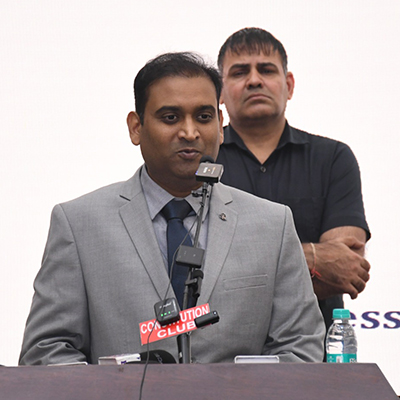

Softa Technologies says it built ZKTOR without venture capital, without government grants in India or Finland and without bank debt. The deeper significance of that decision is not financial austerity, but architectural control: the freedom to build a privacy-first Indian social media platform, a Zero Knowledge communication system, a No URL media environment, contextual advertising, hyperlocal commerce, independent information and purpose-bound artificial intelligence before investors, lenders or public funding programmes could determine what the institution should become.
The modern technology industry has developed a familiar way of measuring ambition. A startup announces the size of its funding round, the prestige of its investors, the valuation assigned to the company and the speed with which it intends to capture a market. Capital becomes evidence that an idea matters before the public has examined the product, and valuation becomes a substitute for the more difficult questions of whether the institution is useful, defensible, responsibly governed or capable of surviving the incentives created by its own business model. Founders are celebrated for raising money, employees are recruited through the promise of rapid scale, and media attention often follows the financing event long before the technology has earned comparable public trust.
Softa Technologies Limited has chosen to tell the ZKTOR story in the opposite direction. Its official investor materials state that the company has raised no venture capital to date, has received no government grants in either India or Finland and remains debt-free, with operations funded through equity capital. Softa’s leadership account goes further, saying founder Sunil Kumar Singh refused foreign venture capital, avoided early institutional funding and declined government grants because he wanted to protect long-term independence, prevent outside pressure on system design and keep privacy and technological sovereignty non-negotiable during the formative stage. These remain company-disclosed facts rather than an independently audited financial history, but the consistency of the disclosure across Softa’s investor, leadership and governance materials makes the capital structure central to the institutional identity the company has chosen to place on the public record.
The decision deserves serious attention precisely because external capital is not inherently undesirable. Startup India describes venture-capital funds as professionally managed investors focused on high-growth companies and recognises self-financing, angel investment, venture capital, debt, grants and government schemes as legitimate financing routes suited to different stages of company development. The Government of India’s Seed Fund Scheme is based on the equally valid proposition that early capital can help startups develop prototypes, conduct trials, enter markets and commercialise innovation. The OECD similarly describes venture capital as an important mechanism for high-growth companies, while its recent work emphasises that good governance and long-term patient capital can support innovation, accountability and economic growth. The relevant question is therefore not whether capital is good or bad. It is whether the timing, expectations and control attached to capital are compatible with the constitution of the company receiving it.
Softa’s quiet capital rebellion is best understood as a decision about sequence. Singh chose to establish the architecture, institutional limits and future business logic before allowing conventional financing pressure to become capable of defining them. Privacy entered before advertising optimisation. Zero Knowledge constraints entered before private communication could be treated as an organisational asset. No URL Media Architecture entered before frictionless media portability could become a growth mechanism. Contextual advertising entered the strategy before behavioural profiling became the assumed route to revenue. ZKTOR, ZHAN, Ezowm, Subkuz and Hola AI were conceived as a purpose-bound ecosystem before the economic attraction of combining every social, commercial, informational and private signal became impossible to resist.
This sequence is the most important fact in the Softa capital story. Many companies attempt to add privacy after the audience, investors and revenue model have already formed around extensive data collection. The institution discovers that its most profitable practices conflict with the safeguards users, regulators or families increasingly demand. Reform then requires the company to reduce the capabilities through which it became commercially powerful. Privacy becomes a negotiation between public legitimacy and existing revenue.
Softa is attempting a more difficult route. It is building the revenue architecture around limits that were established first. The company must prove that contextual advertising can finance social participation, that hyperlocal commerce can create transaction value, that information can support itself without behavioural readership extraction, and that artificial intelligence can provide useful assistance without making private inquiry available to every commercial layer. This is technically and commercially harder than adopting the dominant platform model, but it can produce a company whose future growth does not require the gradual abandonment of the principles through which it initially gained trust.
Architecture Before Valuation
The capital decision becomes meaningful only when connected with an operating product. ZKTOR is publicly available as an Indian social and chat application combining messaging, status, posts, reels, communities, profiles and discovery. Google Play currently places the application in its 500K+ downloads category, describes it as a Made in India social media app designed around privacy and meaningful connection, and lists developer-declared practices including encryption in transit, no declared sharing with third parties and the ability to request deletion. The listing was updated on April 24, 2026.
Softa has separately reported that ZKTOR crossed half a million beta users across India, Nepal, Sri Lanka and Bangladesh, with much of the early adoption coming from Gen Z users and young women. The company has also announced plans to extend testing into Bhutan, Pakistan and the Maldives. Downloads, beta registrations, active accounts and retained communities are different measures and should not be combined carelessly, but the public download threshold and regional beta reporting establish that ZKTOR has moved beyond a founder’s private proposal into a functioning South Asian consumer test.
The platform’s public scale matters because capital restraint can otherwise become a romantic story detached from market evidence. A founder can preserve complete control over an institution no one uses. Softa’s challenge is larger: it must retain the benefits of founder control while demonstrating that the resulting architecture can support adoption, performance, moderation, regional operations, creators and businesses at meaningful scale.
ZKTOR’s differentiation is expressed through several company-described architectural principles. Softa presents the platform as privacy and data safety by design, with device-bound keys and Zero Knowledge constraints intended to keep protected communication inaccessible to platform staff, user-controlled visibility, limits on behavioural tracking and a No URL Media Architecture that reduces ordinary external extraction routes for photographs and videos. The governance framework states that user rights are intended to be enforced through architecture rather than left entirely to discretionary policy, that private communication should not become commercial prediction and that consequential enforcement decisions require documented human review.
These claims require serious technical assurance as the platform scales. Softa’s investor fact sheet says independent security and privacy audits by internationally respected cybersecurity firms are planned after regional deployment milestones, with a publishable verification summary intended for institutional readers. A planned review is not equivalent to a completed independent audit, but including external assurance within the scaling roadmap is strategically important. The strongest version of the Softa story will emerge when founder assertions, public product behaviour and independently reviewable evidence reinforce one another.
The absence of early venture capital gave Softa the freedom to place these principles inside the design before monetisation pressure intensified. It did not prove that the principles work perfectly or that they can survive scale automatically. What it created was the possibility of testing a different institutional order: architecture first, validation second, expansion third and aligned capital after the constitution has become difficult to erase.
The No VC Decision Was a Product Decision
Venture capital is normally discussed as a financial instrument, but in consumer technology it can become a product-design force. Capital arrives with an expectation that the company will grow rapidly enough to produce a return proportionate to the risk. That expectation does not automatically create irresponsible technology. Many important companies could not have built infrastructure, research teams or international markets without risk capital. The tension appears when the fastest measurable route to growth conflicts with the slower work of building trust, regional accountability or commercially inconvenient privacy boundaries.
A social platform has several ways to show rapid progress. It can increase notifications, intensify recommendation, promote emotionally reactive content, acquire users through subsidised campaigns, integrate additional services and make the resulting behavioural signals available to advertising. Each decision can improve a metric that is easy to present to investors. The effects upon autonomy, family confidence, public discourse or long-term institutional legitimacy are harder to measure within the same reporting period.
Singh’s refusal of conventional early venture capital, as described by Softa, gave him greater authority to decide that ZKTOR would not be built around behavioural surveillance or profiling-based monetisation. The company says the platform does not rely on engagement-driven algorithms, hidden scoring or commercial prediction of individuals, and that discovery is intended to follow user choice, relationships, search, regional context and explicit relevance.
The significance is not that investor-backed companies are incapable of responsible design or that founder-owned companies are automatically trustworthy. Founder control can produce discipline, but it can also concentrate power and reduce scrutiny. The credible advantage lies in optionality. Softa was not required to meet an external timeline before its architectural thesis had been established. It could choose a slower product sequence, develop several complementary platforms and refuse some immediate forms of monetisation.
That freedom is particularly important for an Indian social media platform because the fastest commercial model is already well understood. Behavioural advertising can be highly valuable when the company has access to relationships, location, content preferences, media, purchases and private questions. A platform offering social networking, commerce, information and artificial intelligence can construct a more complete model of a person than a single-service company. The temptation is not theoretical. It is embedded within the economics of integration.
Softa’s purpose-bound ecosystem attempts to preserve integration for the user while denying total informational integration to the institution. ZKTOR provides social identity and communication. ZHAN is intended to provide contextual advertising. Ezowm is being developed for hyperlocal commerce. Subkuz is structured as an independent information institution. Hola AI provides a culturally grounded intelligence layer. The products can cooperate when the user requests a specific result, but Softa says they are not intended to create unrestricted cross-service behavioural profiles.
The no VC decision therefore affected more than the ownership table. It made possible an ecosystem whose products are commercially related but constitutionally separate. That is the foundation upon which Softa must now prove that privacy-first technology can become a durable business rather than a founder-subsidised ideal.
No Government Grants and the Difference Between Alignment and Dependency
The absence of government grants has a different strategic meaning from the absence of venture capital. Venture investors can influence growth, control and exits. Government grants can influence research direction, eligibility, milestones, reporting and the public narrative surrounding a project. Grants can finance valuable innovation that private markets are unwilling to support, and public programmes remain essential parts of serious technology ecosystems. Finland’s Digital Trust Finland programme, for example, was designed to help companies build business opportunities based on digital trust, attract investment and develop global ecosystems. The programme included 119 projects with a total volume of €104.3 million, of which €50.6 million came from Business Finland. Its long-term objective included enabling multi-billion-euro business around safe and cybersecure solutions and strengthening Finland’s reputation as a model country for digital trust.
That context makes Softa’s stated refusal of government grants in Finland and India more striking. Singh spent more than two decades living and working in Finland and other Nordic environments, according to Softa, and developed his technology thinking inside a country that actively funds digital trust, AI and business ecosystems. Yet the company says it absorbed Finland’s institutional lessons without accepting Finnish government grant dependence for its core development. Softa makes the same claim regarding India.
This does not make public funding inferior. The Digital Trust Finland programme itself reported benefits in collaboration, business growth and networking, and public funding can accelerate research whose social value extends beyond the immediate return available to a private investor. The strategic significance lies in separating intellectual influence from financial control. Finland supplied Singh with sustained exposure to privacy-conscious digitalisation, cybersecurity, resilient institutions and long-term engineering. It did not, according to Softa’s disclosures, finance the architecture through which those lessons were translated into ZKTOR.
That distinction strengthens the India-Finland narrative. ZKTOR is not a government-backed import presented as an indigenous platform. It is an independently developed Indian social media app informed by international experience. Finland contributed the founder’s understanding of trust as economic infrastructure. Bharat contributed the scale, languages, family structures, informal markets and social consequences that required that understanding to be transformed.
Government independence also protects Softa from being interpreted as an extension of one political administration. ZKTOR can align with national priorities such as privacy, responsible AI, women and youth safety, regional-language inclusion, employment and technological sovereignty without becoming a platform whose legitimacy depends upon political patronage. A national-interest technology institution is not necessarily a state-created institution. In many circumstances, its public value becomes more credible when it can cooperate with governments while remaining financially and editorially independent from them.
This is particularly important for Subkuz. Softa describes the platform as an independent media institution that treats information as public infrastructure, does not profile readers and retains the freedom to examine Softa and its products critically. A media organisation cannot build durable credibility if its editorial position is assumed to follow either parent-company promotion or government funding expectations. Structural separation, diverse revenue and clear governance therefore become as important to Subkuz as encryption is to private communication.
The no-grant story should not be exaggerated into a claim that Softa will never collaborate with public institutions, universities or research programmes. The company says it is open to structured collaboration with public bodies and academic organisations on privacy-preserving infrastructure, safety, responsible AI and regional deployment, while maintaining documented responsibilities and jurisdictional boundaries. Independence is valuable when it creates stronger partnerships from a position of clarity, not when it becomes isolation.
No Bank Debt and the Absence of a Repayment Clock
Debt imposes a different form of discipline. Unlike equity investors, lenders do not normally seek strategic ownership, but debt creates fixed repayment obligations that can become particularly difficult for a consumer platform whose infrastructure requirements arrive before predictable revenue. Servers, security, moderation, legal operations and product development must be financed while user monetisation remains uncertain.
Softa’s official materials state that the company remains debt-free and has been funded through equity capital. This removes one immediate repayment clock, but it does not remove the economic cost of development. Someone still bears the expense and risk. Founder or aligned equity capital absorbs uncertainty that a lender would otherwise price through interest, security or restrictive terms.
The advantage is strategic patience. Softa does not need to force premature advertising, sell valuable user data or launch an immature commerce system merely to meet a debt schedule. Ezowm can remain in pilots until local pricing, seller onboarding, fulfilment and support systems are considered operationally ready. Softa says the hyperlocal commerce initiative is currently in pilot programmes, with phased rollout planned from 2027, and describes success through merchant strength, local fulfilment, trust and operational stability rather than scale alone.
The same patience matters for Hola AI. Artificial intelligence can create spectacular demonstrations before the underlying safety, language and governance systems are mature. Softa describes Hola AI as an intelligence layer whose limits are as important as its capabilities, with deliberate restrictions upon what it can access, infer and influence. A company under urgent repayment pressure might be tempted to commercialise the most intrusive data connections first because they can produce visible personalisation and advertising value. A debt-free formative phase gives Softa more room to test whether purpose-bound intelligence can generate utility without becoming universal observation.
Debt freedom can also improve resilience during market volatility. Advertising conditions, infrastructure prices, policy requirements and international expansion costs can change rapidly. A company carrying limited fixed financial obligations has more ability to slow expansion, preserve employment or redirect investment without triggering a financing crisis.
The other side of that advantage is constraint. A company without debt or institutional capital cannot spend indefinitely. It may grow more slowly, delay infrastructure investment or remain dependent upon founder resources. Capital efficiency becomes a requirement rather than a branding choice. Softa’s claim that it operates with unusual cost discipline must ultimately be tested through financial disclosure, service reliability and the quality of its technical and operational systems.
The quiet capital rebellion is therefore not an escape from economic reality. It is an attempt to replace the pressure of fixed external obligations with the pressure of disciplined execution. That can produce a stronger institution, but only if independence does not become an excuse for underinvestment in cybersecurity, moderation, legal compliance or professional management.
The Founder Who Made Refusal a Strategy
Sunil Kumar Singh’s public identity within Softa is built around refusal. He is presented as the founder who declined foreign venture capital, early institutional funding and government grants, and who chose a lean, debt-free organisation instead. The language is unusually direct for a company leadership page because it places financial decisions beside product architecture rather than treating them as confidential background.
Refusal alone does not make a founder visionary. A founder can reject capital because the company lacks access to it, because control is valued above growth or because outside scrutiny is unwelcome. Softa’s narrative becomes credible only if the refusal is connected with specific institutional outcomes and independently observable progress.
Several such connections are visible in the public record. ZKTOR has reached the Google Play 500K+ download category. Softa has reported a South Asian beta base exceeding half a million users. The company has published governance, investor and policy materials describing its architectural limits. Its ecosystem includes public product plans extending beyond one social application. The investor fact sheet identifies independent security and privacy audits as a scaling milestone. These elements do not prove every internal claim, but they demonstrate that the founder’s refusal has produced more than a statement of independence.
Singh’s deeper distinction lies in treating the company as infrastructure rather than a fundraising vehicle. Softa’s leadership material says he remains involved in architecture, research direction and constitutional adherence while viewing leadership as guardianship of purpose rather than operational micromanagement. The company presents its systems as institutions intended to endure beyond immediate valuation cycles.
This founder model can become one of Softa’s strongest assets and one of its most serious risks. A clear founder constitution can protect the company from strategic drift. Excessive dependence upon one founder can weaken succession, professional accountability and investor confidence. The next institutional achievement must therefore be the transformation of Singh’s personal refusal into governance that survives Singh himself.
Privacy boundaries should not depend upon his continued presence. Purpose separation should be protected through documented policies, technical access controls, board responsibilities, audit rights and investor agreements. Subkuz’s editorial independence should not rely upon the founder choosing not to intervene. The company’s capital principles should distinguish aligned investment from control capable of rewriting the architecture. Founder conviction becomes institutionally valuable only when it can be converted into rules that future executives are required to respect.
The quiet technologist becomes a serious technology statesman when he builds an institution that remains principled even after his personal authority is no longer necessary to protect it.
ZHAN and the Business Model That Does Not Need to Know Everything
The most difficult test of Softa’s capital philosophy will be advertising. Social platforms require sustained funding for infrastructure, security, product development and trust operations. Advertising is an obvious source of revenue, but behavioural advertising can conflict directly with the privacy architecture through which ZKTOR seeks to differentiate itself.
ZHAN is Softa’s proposed answer. The company describes it as a hyperlocal advertising model in which relevance is grounded in location, language and context rather than predictions about individuals. Local businesses can reach audiences based upon the present commercial environment without requiring the platform to build intimate psychological profiles.
This is a business-model consequence of Singh’s refusal. If investors had entered early demanding the fastest possible advertising yield, ZKTOR might have adopted the dominant behavioural model before the wider ecosystem was ready. Contextual advertising often requires deeper knowledge of geography, businesses, content categories and local markets, and may take longer to operationalise than centralised profiling. It requires people capable of verifying merchants, assisting campaigns, understanding language and coordinating creators.
The slower route can create a different economic structure. A restaurant does not need the platform to know a customer’s private anxieties. It needs people nearby who are presently interested in food. A tutor needs families exploring education in a realistic service area. A regional creator needs businesses relevant to the audience’s language and community. Context can produce sufficient commercial intelligence without granting the platform ownership of the individual’s interior life.
This is particularly important for younger users. India’s data-protection framework restricts behavioural monitoring and targeted advertising directed at children. A platform less dependent upon individual profiling has more capacity to serve families and young people without making its commercial model structurally incompatible with stronger safeguards.
For investors, ZHAN represents more than an ethical advertising idea. It is a potential revenue engine capable of converting regional context, business verification and creator relationships into commercial value. The model could support merchant services, campaign operations and local employment while reducing the reputational and regulatory exposure associated with opaque profiling.
Its success will need to be demonstrated through merchant retention, repeat campaign demand, understandable measurement and commercial outcomes. Contextual advertising becomes an investment thesis only when small businesses repeatedly pay for it because it works.
Ezowm and the Economics of Patient Commerce
Ezowm illustrates why Softa required patient capital even without formal investors. Hyperlocal commerce is operationally difficult because it must coordinate local prices, availability, merchants, fulfilment, support and disputes across markets that do not behave uniformly. Softa says Ezowm is being designed for local sellers and local livelihoods rather than as a centralised marketplace, and that it aims to create operational roles in seller onboarding, fulfilment coordination, customer support and local quality workflows.
A growth-first investor might ask why Softa does not centralise inventory, standardise pricing and pursue national transactions more quickly. The answer lies in the market the company claims to serve. A kasba is not simply a smaller metropolitan city. Regional commerce is shaped by relationships, seasonal supply, transport, language and local pricing. A uniform system can gain operational efficiency while weakening the merchant structures Softa says it wants to strengthen.
Ezowm’s slower rollout is therefore part of the capital thesis. The company can test whether local commerce can be digitised without displacing the local economy or converting transactions into behavioural surveillance. ZKTOR can provide social identity and communication. ZHAN can create contextual discovery. Ezowm can handle the transaction. Hola AI can assist with language and operations. The services become commercially complementary without treating the purchase as permission to reconstruct every other part of the customer’s life.
The employment potential arises from the same restraint. Local seller onboarding, fulfilment and support cannot be handled exclusively through distant automation. The model requires regional professionals, creating a route through which digital capability can remain closer to the communities generating the commerce.
Softa says this distributed operating model is intended to support district-level capacity and reduce the pressure on educated young people to migrate for work. The claim remains a future operating thesis rather than evidence of employment at scale, but the job categories arise directly from the architecture.
Capital patience becomes employment strategy because the company is willing to build local capability instead of extracting local demand into one central system.
Subkuz and the Refusal to Turn Journalism Into Corporate Marketing
Subkuz is one of the most revealing tests of Softa’s institutional seriousness. A company building a social platform, advertising network, commerce system and AI layer could use a media property to promote the ecosystem, defend the founder and generate favourable narratives. Softa publicly states that Subkuz is not intended to serve that function.
The company describes Subkuz as an independent media organisation built around editorial credibility, hyperlocal reporting, institutional memory and journalism without behavioural extraction. It says the platform does not require reader accounts, does not build predictive attention models and retains the freedom to examine Softa and its products. Revenue is intended to come from contextual hyperlocal advertising and institutional partnerships separated from editorial judgment.
This editorial independence is connected with capital independence. A media organisation dependent upon a single investor, government grant or parent-company advertising objective can face subtle pressure even without direct censorship. Softa’s challenge is to construct a financial and governance structure through which Subkuz can criticise the company funding its development.
The founder’s refusal gains credibility if he is willing to institutionalise disagreement. A quiet technology statesman cannot be defined only by the systems he controls. He must also be judged by the independent institutions he permits to scrutinise those systems.
Subkuz can strengthen the entire Softa ecosystem when readers believe its journalism exists for public understanding rather than corporate amplification. It can report on local businesses, district employment, public policy, digital harms and the performance of ZKTOR itself. That credibility can create durable audiences and contextual advertising value without requiring behavioural readership extraction.
The commercial paradox is powerful. Softa may generate more long-term institutional value by refusing to control the narrative than it could generate through continuous favourable coverage. Editorial independence becomes a trust asset precisely because it creates the possibility of uncomfortable reporting.
Hola AI and the Refusal to Monetise Private Questions
Artificial intelligence presents the most valuable and dangerous commercial opportunity inside Softa. A conversational system can support translation, education, commerce, creator productivity, regional language and safety. It can also receive questions revealing health, debt, fear, relationships and personal uncertainty.
A company operating social media, advertising, commerce and information could use those questions to interpret every other activity. An inquiry about financial difficulty could improve lending advertisements. A question about health could influence commerce. A private disclosure of harassment could shape recommendations. The AI assistant could become the missing layer through which the institution understands the entire person.
Softa says Hola AI is not conceived as a general intelligence that observes everything, predicts everyone or intervenes across every domain. The company describes deliberate limits on what the system may access, infer and influence, framing those restrictions as conscious governance rather than technical weakness.
This philosophy is economically demanding. Private prompts can become extremely valuable commercial signals. Refusing to use them across the wider ecosystem means giving up a targeting advantage. Singh’s capital independence allowed Softa to define this refusal before an investor could argue that the unused data represented unrealised value.
The resulting product principle is straightforward. A creator can ask Hola AI to translate a ZKTOR post. A merchant can request an Ezowm listing or a ZHAN campaign draft. These are explicit, user-directed connections. A private question should not travel automatically into unrelated services because the same company operates them.
The long-term business model must prove that Hola AI can generate value through utility, professional services, language tools, enterprise deployments or defined premium capabilities rather than through the silent commercial interpretation of vulnerability. If Softa achieves that, it can establish a valuable category within responsible AI: intelligence that becomes more useful without making the parent institution more entitled to the user.
Women, Girls and the Commercial Meaning of Founder Control
Capital architecture may appear distant from women and girls, but the relationship is direct. Social platforms under growth pressure can be rewarded for wider visibility, greater interaction and deeper personalisation. Women and girls often bear the greatest cost when those systems weaken the separation between public participation and private identity.
No URL Media Architecture, user-controlled visibility, protected communication and restrictions upon profiling are not abstract technical preferences. They can determine whether a woman feels able to create, whether a girl can participate without every photograph becoming easily extractable, and whether a home-based entrepreneur can build a professional presence without exposing the household.
Softa’s refusal of early external pressure made it possible to place those boundaries before the company had an advertising model demanding more access. The founder did not need to convince an existing investor that reduced media portability was more valuable than easy circulation, or that private communication should remain inaccessible even if reading it could improve recommendations.
The commercial value appears through participation. Women who trust the platform can become creators, merchants, campaign professionals, moderators and customers. Families can accept younger users more confidently. Women-led businesses can move beyond private referrals while maintaining stronger control over professional and personal identities.
A safer social media platform does not generate value only by preventing incidents. It expands the market by allowing people previously constrained by risk to participate. ZKTOR’s future claim to be one of India’s strongest contenders for the safest social media app will depend upon converting architecture into measurable confidence, responsive operations and sustained female participation rather than relying upon an absolute marketing declaration.
The capital rebellion matters because Softa was free to treat dignity as market infrastructure before the market had rewarded it.
Gen Z, Gen Alpha and the Refusal to Sell the Future Too Early
Softa reports that Gen Z users and young women account for much of ZKTOR’s early South Asian beta adoption. Younger users are commercially attractive because a platform that gains them early can retain relationships across education, creation, employment and commerce. The temptation is to build lifelong behavioural profiles before the users understand the future value of the information they are producing.
An AI age social media platform must preserve the right of young people to change. A temporary interest should not become a permanent advertising category. A period of insecurity should not shape years of recommendations. Childhood media should not become freely available for technologies developed later. A private question should not become evidence through which the institution predicts adult behaviour.
Softa’s non-profiling philosophy and purpose separation provide a potential foundation for that freedom. The platform can offer reels, messaging, communities, creators and discovery without treating psychological prediction as the principal business engine. Hola AI can assist without making every prompt available to advertising. ZHAN can monetise adult commercial context rather than younger users’ vulnerabilities.
This model can produce slower short-term engagement growth than highly personalised systems. It can also produce stronger family confidence, lower regulatory conflict and longer institutional relationships. A young user can remain because the platform supports communication and opportunity, not because an algorithm has become progressively better at exploiting attention.
The founder’s refusal of capital becomes an intergenerational decision. Singh declined to sell influence over the architecture before the future users had arrived.
Finland, Bharat and the Paradox of Independent Trust Technology
Finland occupies an unusual place in the Softa story. Business Finland has actively funded digital trust, AI and consumer-technology ecosystems, explicitly treating trusted and secure systems as sources of business growth and international competitiveness. Finland’s Digital Trust programme sought to create multi-billion-euro business and a national reputation around safe digital solutions.
Singh lived and worked within that environment for more than two decades, according to Softa, yet chose not to rely on Finnish government grants for the company. This produces an important distinction between learning from an ecosystem and becoming financially dependent upon it.
Finland gave Singh access to a social and professional environment in which institutional trust, cybersecurity, public systems and long-term engineering carry economic legitimacy. Rural Bharat gave him direct understanding of languages, family structures, informal enterprise and communities where digital harm can move immediately into offline life. ZKTOR and the Softa ecosystem represent his attempt to synthesise the two.
The platform is not Finnish technology relocated to India. It is Indian technology informed by Finnish institutional discipline. Nor is it a state-supported bilateral project. Softa presents it as an independently financed company operating through entities in India and Finland, with ZKTOR serving as the flagship platform and reference architecture.
This strengthens India’s national-pride angle because Atmanirbhar Bharat is not reduced to isolation or rejection of foreign expertise. It becomes the capacity to learn from the world’s strongest systems while retaining ownership of the resulting architecture, priorities and intellectual direction.
Singh took trust from Finland as an idea, not as a grant condition. He returned it to Bharat as a product constitution.
Employment Without a Centralised Extraction Economy
Softa’s ecosystem carries a broad employment thesis. ZKTOR requires creators, moderation, community operations and support. ZHAN requires campaign managers, merchant verifiers and regional-language professionals. Ezowm requires seller onboarding, fulfilment coordination and customer service. Subkuz requires reporters, editors and contributors. Hola AI requires language evaluators, safety reviewers and domain specialists.
Softa’s career and stakeholder materials identify opportunities across technology, research, design, operations, governance, content, community systems and support, and describe district-level capacity as part of the long-term operating model.
The employment significance lies in the relationship between the business model and the location of knowledge. A central behavioural-advertising system can automate much of its commercial intelligence from headquarters. A contextual, hyperlocal and language-led system requires people who understand businesses, communities and cultural meaning close to the market.
This can allow educated young people to contribute from smaller cities and districts rather than treating permanent migration as the only route to technology work. Women facing mobility or caregiving constraints can participate through local or remote roles. Regional-language and cultural knowledge can become professional assets rather than informal abilities excluded from the technology economy.
The company must avoid converting this aspiration into unsupported employment numbers. The credible claim is structural: if the ecosystem expands as designed, its operations require categories of local work. Scale, training, compensation and employment quality will determine whether the opportunity becomes socially meaningful.
Capital independence supported this employment philosophy because Softa could plan for distributed capability before investors demanded maximum automation and minimum local operating cost. The future challenge is to ensure that efficiency and growth do not eventually remove the very employment architecture used to establish social value.
South Asia and Capital Independence as Regional Credibility
ZKTOR’s South Asian expansion introduces a question of political and commercial trust. A platform developed in India must persuade users in Nepal, Bangladesh, Sri Lanka and future beta markets that it will not treat neighbouring countries merely as sources of data, attention and advertising revenue.
Softa’s stated region-bound architecture, contextual business model and local operations strategy can support that credibility. The company says data should remain governed within jurisdictional boundaries and that expansion should create local moderation, language, merchant and support capability rather than unrestricted central cross-border pooling.
Capital independence matters because aggressive investor timelines can reward rapid regional user acquisition before local governance systems are ready. A company can enter several countries through marketing while keeping meaningful decision-making, employment and data control at the centre. Softa’s slower, region-by-region language gives it the opportunity to build local accountability before full commercial scale.
An Indian social media platform earns regional trust when it creates value inside every market. A Bangladeshi merchant should gain local customers and support. A Nepali creator should gain commercial relationships. A Sri Lankan woman should receive meaningful media and privacy boundaries. Local professionals should participate in moderation, advertising, journalism and commerce.
This is a stronger form of Indian digital influence than centralised expansion. India becomes associated with technology that respects the sovereignty of neighbouring societies while carrying Indian architectural authorship. Voluntary adoption becomes digital soft power.
The Future Investor Must Enter Through the Constitution
Softa’s quiet capital rebellion does not imply that the company can or should remain permanently outside institutional finance. A platform seeking to operate across India and South Asia will require substantial resources for infrastructure, security, legal compliance, specialised moderation, artificial intelligence, creator tools and commerce operations.
The next question is not whether Softa will need capital. It is what kind of capital the company is prepared to accept and which rights investors will receive over the architecture.
Startup India notes that financing sources should align with a startup’s stage and growth requirements. The OECD’s work on corporate governance similarly emphasises that transparent governance and patient capital can support long-term value. Softa’s opportunity is to convert its no-VC history from a permanent rejection into a negotiating advantage.
Aligned investors can accelerate the company without demanding surveillance-led monetisation. They can finance cybersecurity, independent audits, infrastructure, regional teams and professional governance. They can support commerce and AI services capable of generating direct value. The investor gains access to a differentiated platform category; Softa gains capital without surrendering the boundaries that make the category valuable.
The terms must protect more than founder control. They should protect user rights, purpose separation, Subkuz editorial independence, jurisdictional governance and the prohibition against repurposing private communication or AI prompts for unrelated commercial use. The constitution should survive future fundraising, acquisition or leadership change.
A serious investor may prefer that clarity. An undefined startup offers flexibility, but also strategic risk. Softa can present a more mature proposition: the architecture is established, the product has public distribution, the ecosystem has defined revenue pathways, and capital is sought to scale rather than invent the institution’s principles.
The capital rebellion reaches its highest form when saying no early makes it possible to say yes later without losing the company.
The Billion-Dollar Pathway Without Billion-Dollar Burn
Softa’s future-unicorn thesis cannot be based simply upon the absence of venture capital. Capital restraint does not create valuation automatically, and founder ownership does not substitute for revenue, retention or operational execution. The credible billion-dollar pathway lies in whether Softa can convert its architecture into repeatable economic value.
ZKTOR must convert downloads and beta accounts into retained active communities, creator activity, messaging usage and family confidence. ZHAN must generate repeat contextual advertising demand. Ezowm must create transactions while proving local fulfilment and merchant economics. Subkuz must build credible audiences and sustainable revenue without becoming a profiling engine. Hola AI must provide language and productivity utility while preserving the privacy of user inquiry.
The ecosystem can reduce single-product dependency. Social distribution supports advertising and commerce. Regional information strengthens community relevance. AI reduces language and operational barriers. Hyperlocal businesses create revenue and employment. Privacy and safer participation can expand adoption among women, young people, families and institutions.
The moat would not consist of one feature. Messaging, reels and commerce interfaces can be copied. The deeper defensibility would come from the accumulated relationship among architecture, local business networks, creator trust, regional-language capability, women and family confidence, South Asian operations and founder-established institutional limits.
Independent verification will be important to this valuation thesis. Investors and policy makers will eventually require more than company documentation. Security audits, privacy assessments, governance reporting, retention metrics, advertising performance, merchant economics and evidence of grievance resolution will turn narrative into diligence.
If those measures become strong, Softa could present an unusual investment case: a company that reached meaningful public distribution without conventional venture capital, protected its product constitution before fundraising, established several monetisation layers and now seeks aligned growth capital from a position of demonstrated independence.
The billion-dollar achievement would not be that Singh built without money. Technology of this scale always requires money. The achievement would be that he built without allowing early money to determine what the company was permitted to become.
India’s National Pride in the Power to Refuse
India’s startup success has often been celebrated through funding totals, unicorn counts, global investors and high-profile exits. Those achievements reflect real entrepreneurial capability and have helped create companies, jobs and international confidence. Softa adds another model to the national story.
Its national-pride value lies in the claim that Indian founders can define architecture before valuation, absorb global knowledge without becoming financially subordinate to it, and build consumer technology around principles not copied from the dominant platform economy.
ZKTOR is a Made in India social media app, an Indian social media platform and an emerging AI age social media platform. Its larger importance lies in the ecosystem developing around it. ZHAN can build an Indian contextual advertising layer. Ezowm can strengthen hyperlocal commerce. Subkuz can create an Indian information institution with editorial autonomy. Hola AI can develop culturally grounded intelligence. The combined architecture can generate employment, creator opportunity, women-led enterprise and regional influence.
Sunil Kumar Singh’s refusal of venture capital, government grants and debt should not be mythologised as evidence that capital itself is corrupt. Its credible meaning is more precise. He preserved the right to decide what Softa would refuse to monetise before other institutions acquired the authority to ask.
That is a form of technological sovereignty more substantial than ownership alone. India gains an indigenous company, but users retain protected territory within it. The founder retains control, but the architecture is intended to limit the founder’s own access to private content. The company builds a super app ecosystem, but rejects the assumption that integration grants unlimited rights over the person.
The power to refuse becomes national strength when it produces better institutions rather than merely slower companies.
The Quiet Capital Rebellion as an Institutional Test
Softa’s story now enters its most difficult phase. It was easier to preserve architectural control before scale, large advertising demand, international operations and institutional investors arrived. The real test will begin when ZKTOR’s user base becomes more commercially valuable, when Hola AI receives more intimate questions, when Ezowm transactions produce detailed economic information and when advertisers offer greater revenue in exchange for deeper targeting.
The company will repeatedly encounter opportunities to weaken its limits. A new data connection may improve conversion. A recommendation model may increase time spent. A commercial partner may request access across products. A future investor may describe purpose separation as inefficient. A government may seek broader visibility. A faster expansion route may bypass local accountability.
Singh’s refusal will matter only if Softa can continue refusing after the financial rewards for saying yes become much larger.
This is why governance, audits, transparency and institutional separation must become the next stage of the founder’s work. The company cannot rely forever upon personal conviction. It must construct technical, legal and organisational mechanisms through which misaligned capital and future leadership remain unable to dismantle the privacy constitution quietly.
If Softa succeeds, its capital history will become more than an unusual startup biography. It will become evidence that a founder can delay conventional finance long enough to establish a platform whose business model, user rights and institutional boundaries are negotiated before valuation becomes the dominant language of the company.
ZKTOR can then occupy a valuable global category: a privacy-first Indian social media platform built for the AI age, a serious contender in the safer social media market and the social foundation of a human-centred Indian super app ecosystem. Softa can become a company whose future-unicorn pathway rests not upon the amount of early capital it consumed, but upon the economic value produced by the architecture that early capital was never permitted to rewrite.
The quiet capital rebellion is therefore not a rejection of investors, governments, banks or global cooperation. It is a demand that finance return to its proper role. Capital should serve the institution’s purpose, not become the author of that purpose. Investment should accelerate architecture, not erase it. Government cooperation should strengthen public capability, not create political dependence. Debt should finance productive expansion, not force premature exploitation.
Sunil Kumar Singh’s most consequential decision may ultimately prove to be the one he made before ZKTOR entered the public market and before Softa possessed a valuation capable of attracting the world’s largest funds. He decided that privacy, dignity, data sovereignty and long-term Indian technological authorship would be established first, while money would be invited only after the company had learned what it must never be allowed to buy.
If the architecture survives scale, that refusal will become far more valuable than a funding headline. It will become the founding asset of a potential billion-dollar Indian trust-technology institution.