
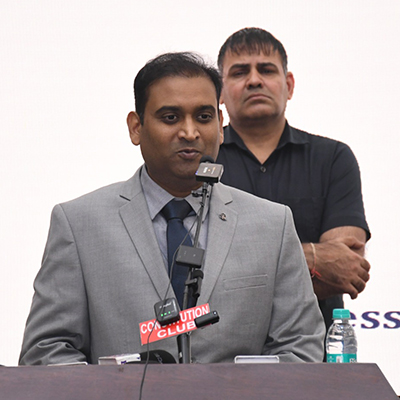
Softa Technologies founder and chief architect Sunil Kumar Singh has spent more than two decades moving intellectually and professionally between two radically different technology environments: Finland’s high-trust institutional culture and Bharat’s vast, multilingual, family-centred and locally rooted society. ZKTOR, ZHAN, Ezowm, Subkuz and Hola AI represent his attempt to translate those worlds into a privacy-first Indian super app ecosystem capable of strengthening women’s dignity, youth safety, creators, district economies, employment, South Asian digital influence and a credible billion-dollar trust-technology pathway.
The most important international technology bridges are not built by transferring one product from one country into another. They are built when an individual understands why a system succeeds within one society, identifies which principles can travel and then reconstructs those principles around the realities of a completely different population. Technology transfer can copy software, purchase equipment or reproduce an operating process. Institutional translation is more difficult. It requires understanding the social values, commercial incentives, governance habits and limits upon power that made the original environment trustworthy in the first place.
Sunil Kumar Singh’s public founder story sits inside this more demanding form of translation. Softa Technologies describes him as having been born in rural Bharat and shaped by decades of professional experience across Finland, Sweden, Norway, Switzerland and the wider European innovation ecosystem. The company says that Singh spent more than two decades living and working within Nordic societies, observing an institutional model grounded in public trust, privacy, long-term systems and disciplined engineering, while remaining closely connected with the economic, linguistic and infrastructural realities of Indian villages and regional communities.
These two environments could hardly be more different in scale or social structure. Finland is a small, digitally advanced European nation whose institutions operate within relatively stable administrative and technological frameworks. Bharat is a continental society containing hundreds of millions of first-generation digital users, extraordinary linguistic diversity, strong family and community networks, extensive informal commerce and sharp differences in infrastructure, literacy and institutional access. A technology system designed for one environment cannot simply be transplanted into the other without losing relevance.
Singh’s significance therefore lies not in importing a Finnish social application into India, and not in describing Finland as a flawless digital ideal. It lies in translating a Nordic institutional doctrine into technology designed for Bharat. The doctrine is simple but commercially demanding: trust should not depend only upon what a company promises to do with power. It should depend upon how much unnecessary power the architecture refuses to give the company in the first place.
This idea now carries unusual geopolitical relevance. In March 2026, India and Finland elevated their bilateral relationship to a Strategic Partnership in Digitalization and Sustainability. Their joint statement emphasised safe, trustworthy and inclusive artificial intelligence, deeper technology cooperation, greater investment and the intention to double bilateral trade by 2030. The partnership reflects a growing alignment between India’s scale, markets and technological ambition and Finland’s expertise in trusted digital systems, security and sustainable innovation.
ZKTOR and the wider Softa ecosystem can be understood as a private-sector expression of that emerging bridge. The company is Indian in its social mission and platform ambition, while Singh’s institutional thinking was shaped partly through long exposure to Finland. ZKTOR is not government-created, and Softa states that it received no government grants in India or Finland. The architecture was not produced through an official bilateral programme. Yet its central themes closely reflect the areas in which India and Finland now see shared strategic value: trustworthy digitalisation, responsible AI, resilient infrastructure, international technology cooperation and commercial systems capable of earning public confidence.
Finland’s Most Valuable Export May Be Institutional Restraint
Finland’s technology reputation is frequently associated with telecommunications, education, cybersecurity, clean technology and advanced public digital services. Beneath these sectors lies a less visible advantage: trust functions as economic infrastructure. Citizens and businesses are more willing to use digital systems when institutions are expected to operate predictably, security is treated as foundational and public or commercial authority is constrained through law, process and professional culture.
Business Finland has explicitly attempted to convert this reputation into international business. Its Digital Trust Finland programme was launched to help Finnish companies develop opportunities based upon digital trust, attract investment and build global ecosystems around secure and reliable digital solutions. The programme involved 119 projects with a total volume exceeding €104 million and sought to enable multi-billion-euro business around cybersecurity, trusted societies and resilient digital infrastructure. Business Finland’s evaluation found that the initiative strengthened collaboration, business development and networking across participating organisations.
A separate Finnish ecosystem led by Tietoevry describes its mission as developing affordable, accessible and trusted digital services for citizens while converting responsible data-enabled platforms into globally scalable business value. The model treats trust not as a charitable limitation upon innovation, but as an ingredient of competitiveness, export potential and long-term platform economics.
This distinction is central to understanding Singh’s Softa thesis. Privacy is often described in technology businesses as a cost imposed by regulation, a user preference that reduces personalisation or a restriction limiting the company’s ability to monetise information. The Finnish institutional environment offers a different perspective. Security, privacy and reliability can become assets because they increase adoption, reduce systemic risk, strengthen commercial relationships and make technology acceptable inside sectors where failure carries serious consequences.
Singh appears to have carried this trust-as-infrastructure idea into Softa, but he did not attempt to reproduce Finland’s systems mechanically. Bharat’s problem is not simply that citizens need more secure versions of existing digital products. India requires platforms capable of working across regional languages, uneven connectivity, social hierarchies, family expectations, informal enterprises and communities where digital harm can move rapidly into physical, professional and reputational life.
A woman whose photograph is misused may face family, employment and safety consequences outside the platform. A local merchant depends upon personal reputation rather than anonymous marketplace ratings alone. A regional creator’s influence may be culturally deep but invisible to national advertising models. A young person’s digital identity develops within family and community structures that cannot be understood through individual consumer behaviour alone. A district journalist may operate in a language or market too small to receive attention from national systems.
The Nordic lesson of trusted institutions therefore needed a Bharat-specific architecture. ZKTOR became the social and communication layer. ZHAN became the proposed contextual advertising layer. Ezowm became the hyperlocal commerce layer. Subkuz became the information and diaspora layer. Hola AI became the culturally grounded intelligence layer. The products collectively seek to make digital systems useful at Bharat’s scale without assuming that scale requires unlimited surveillance.
Bharat Supplied the Human Problem
Softa’s public materials describe Singh’s early life as shaped by rural infrastructure, linguistic diversity and economic constraint. The significance of this background lies not in creating a sentimental village-to-Europe founder biography, but in explaining why Softa’s products are organised around problems that global platforms frequently treat as secondary.
Most large technology systems are designed first for users possessing reliable devices, stable networks, formal identities, digital literacy and clearly separated professional and personal lives. Bharat contains millions of such users, but it also contains hundreds of millions whose digital participation is governed by very different conditions. One smartphone may serve several household functions. A small business may operate through the owner’s personal number. A woman’s professional account may remain socially connected with family identity. Language may shift between dialect, Hindi and English within one interaction. A local transaction may depend upon personal trust, cash flow and informal fulfilment rather than standardised logistics.
These conditions do not indicate that Bharat requires inferior technology. They indicate that Bharat requires technology capable of understanding more complex social boundaries. Privacy controls must be comprehensible to first-generation users. Safety systems must understand regional language and local consequences. Commerce must respect local prices, supply and fulfilment. Artificial intelligence must operate through voice and cultural context. Advertising must become accessible to businesses without specialised digital teams.
The failure to design around these realities creates dependency. Citizens technically gain access to global systems but remain required to adapt themselves to the system’s assumptions. Local businesses become visible but surrender customer intelligence to distant platforms. Creators gain reach but remain dependent upon opaque recommendations. Regional languages generate content without receiving equivalent commercial or technological investment. Women gain professional opportunity while carrying disproportionate exposure risk.
Singh’s Nordic-Bharat bridge seeks to reverse this relationship. Bharat should not be treated merely as a large market for technology designed elsewhere. Its social realities should become the source of original global technology architecture. The country’s diversity should not be simplified before advanced systems can serve it. The technology should become sophisticated enough to preserve diversity while remaining secure, useful and commercially sustainable.
This is where ZKTOR’s importance extends beyond national branding. An Indian social media app becomes internationally significant only when it solves a problem that other markets also confront. Privacy erosion, behavioural manipulation, media extraction, AI-generated impersonation, creator dependency and distrust of digital institutions are not uniquely Indian problems. Bharat’s complexity gives Softa a demanding environment in which to test an architecture that could eventually become relevant far beyond South Asia.
ZKTOR as the First Public Translation
ZKTOR is the most visible expression of Singh’s institutional synthesis. Google Play describes it as a Made in India social media app combining secure chat, reels, status, posts and communities, with end-to-end encrypted communication, privacy controls, blocking, reporting and moderation tools. The listing identifies the platform as designed for Indian users, creators, devices and networks and shows that it was updated in April 2026. Google Play also places ZKTOR within its publicly visible 500K+ download category.
The public distribution signal matters because the Nordic-Bharat thesis cannot rest only upon founder philosophy. A technology institution must convert ideas into a product people can download, understand and use. ZKTOR’s combination of messaging, social feeds, short video, pages, profiles and communities places the platform inside a highly competitive market where users already possess familiar alternatives.
Its differentiation therefore cannot depend upon reproducing existing functions under an Indian name. The relevant distinction lies in the relationship among those functions and the institution operating them. Softa describes ZKTOR as designed around Zero Knowledge constraints, user-controlled visibility, limits upon behavioural prediction and a No URL Media Architecture intended to restrict ordinary external media extraction. Its governance framework says discovery should prioritise contextual relevance, relationships and user boundaries rather than maximising time spent or emotional reaction.
These architectural choices reflect the Finnish lesson of restraint while responding to Bharat’s social needs. Private communication is treated as protected territory rather than a source of advertising intelligence. Media visibility remains connected with audience context rather than automatically producing an externally portable file. Discovery can assist users without requiring the platform to construct a complete psychological model. Safety is treated as an engineering responsibility rather than a list of community rules added after harmful circulation has begun.
The result is an Indian social media platform attempting to compete within the AI age through a different source of value. Established platforms often become more powerful by knowing more about the user. ZKTOR’s thesis is that a platform may become more trusted, durable and commercially valuable by demonstrating that it does not need to know everything.
Zero Knowledge Architecture as Nordic Discipline at Bharat Scale
Zero Knowledge is one of the strongest examples of institutional translation within ZKTOR. Softa says the platform’s servers are structurally limited in their ability to read or interpret protected user content and that private communication is protected through encryption and device-level boundaries. The principle is that privacy should not depend only upon employees, executives or future investors choosing to behave responsibly. The architecture should reduce the readable information available to them.
This approach reflects a high-trust paradox. Trustworthy institutions do not ask citizens to trust them without limit. They create procedures and technical boundaries that make excessive trust unnecessary. A bank does not demonstrate security by asking every employee to promise not to misuse unrestricted access. It restricts access according to role and purpose. A social platform handling intimate communication should be held to a similarly disciplined standard.
For Bharat, this becomes especially important because private messaging can contain information about family, health, employment, finances, relationships and safety. A communication platform capable of interpreting such content possesses extraordinary power over citizens and businesses. Domestic ownership does not make that concentration harmless. An Indian institution can become as intrusive as a foreign institution if it collects the same information and operates under the same commercial incentives.
Zero Knowledge architecture therefore gives digital sovereignty an individual dimension. India gains domestic social infrastructure, while citizens retain protected areas within that infrastructure. The nation becomes less dependent upon external platforms without requiring the individual to become more dependent upon an Indian company.
The architecture also protects against institutional change. Singh may remain committed to privacy, but founders do not control companies forever. Executives change, investors enter, governments make requests and commercial pressures evolve. Information readable today can become valuable tomorrow. Technical limitation provides stronger continuity than founder reputation alone.
This is one reason the Finland angle remains commercially meaningful. Finland’s digital-trust tradition is not simply a belief that institutions will always act honourably. It is a commitment to resilience, secure systems and predictable limitations. Singh’s contribution is to place that discipline inside an Indian consumer platform intended for large-scale social use.
No URL Media Architecture and the Protection of Dignity
ZKTOR’s No URL Media Architecture represents another translation of institutional restraint into a practical social problem. Softa says that photographs and videos uploaded to ZKTOR do not expose ordinary external URLs that can be copied, scraped or redistributed through common workflows. Content remains available within the intended platform context and according to the publisher’s visibility choices.
The architecture does not make copying impossible. An authorised viewer may use screenshots, screen recordings, compromised devices or external cameras. The credible advantage lies in refusing to make extraction easy, automatic and scalable. Public platforms have historically treated media visibility as technical portability. AI has made that assumption increasingly dangerous because images and voices can become input for synthetic identities, false endorsements, manipulated videos and sexualised abuse.
Women, girls and creators face particularly high costs when context collapses. A professional photograph may become material for a fraudulent account. A creator’s voice may be cloned for a scam. A family image may reveal relationships used in impersonation. A young woman’s photograph may be manipulated into fabricated sexual content whose social consequences remain real even though the image is false.
A safer social media platform cannot guarantee that malicious people will never capture visible content. It can ensure that the institution itself does not make extraction one of the easiest functions available. No URL Media Architecture turns prevention into a product decision rather than leaving all responsibility with users after the media has escaped.
This has direct economic value. Women can become professionally visible with stronger control over personal media. Creators can publish original work with reduced automated extraction risk. Families can share contextual media with greater confidence. Businesses can use recognisable identities without treating every image as an unrestricted public asset.
The Female Participation Dividend discussed throughout Softa’s wider vision therefore emerges naturally from the Nordic-Bharat bridge. Finland contributes the principle that privacy and dignity should be ordinary institutional expectations. Bharat contributes the urgent social reality that weak media boundaries can remove women from education, public expression, creator markets and entrepreneurship.
A Post-Algorithm Social Network for a Human-Scale Society
ZKTOR’s governance framework says the platform does not optimise feeds primarily to maximise time spent or emotional reaction and that discovery should prioritise user choice, relationships, search and contextual relevance over behavioural prediction.
This choice reflects another Nordic institutional principle translated into a much larger environment: technology should increase capability without quietly reducing autonomy. Recommendation systems can help users discover creators, communities and information, but they become problematic when they are designed principally to predict which content a person will find hardest to ignore.
Bharat’s diversity makes behavioural simplification especially dangerous. One user may belong to several linguistic, professional, family, religious and regional contexts. A platform constructing one predictive identity can flatten those roles and then reinforce the simplified model through recommendations and advertising.
A post-algorithm social network does not eliminate algorithms. It places them beneath explicit human choice. A user can follow communities, search topics, discover regional creators and select relationships. The platform may recommend relevant material, but recommendation does not become the only route through which social reality appears.
For creators, this can produce more durable communities. Their professional value becomes connected with returning relationships, cultural relevance and subject authority rather than one viral moment. Regional creators gain recognition because local trust matters commercially even when national reach remains smaller.
For young users, the architecture can preserve developmental freedom. A temporary interest should not become a permanent commercial profile. A period of insecurity should not define the content environment for years. Gen Z and Gen Alpha can discover new communities without allowing the institution to treat every experimental identity as predictive truth.
The Finland-Bharat bridge appears again through this balance. Finland contributes the institutional value of agency, predictability and systems that citizens can understand. Bharat contributes the need for a social platform capable of respecting several simultaneous identities rather than forcing users into one algorithmically convenient category.
Hola AI and the Translation of Responsible Intelligence
Artificial intelligence is the layer through which the Nordic-Bharat bridge could become most internationally consequential. Hola AI is Softa’s proposed culturally grounded intelligence system for language, practical assistance, knowledge preservation and defined safety functions.
The challenge is larger than creating an Indian-language chatbot. A translation system can reproduce words without understanding the social meaning surrounding them. A culturally grounded system must recognise language, family, profession, local commerce, regional history and vulnerability without treating culture as a fixed category controlling the individual.
Finland offers one part of this model through its emphasis on trustworthy and inclusive AI. India and Finland’s 2026 joint statement explicitly identified safe, trustworthy and inclusive AI development as a shared priority within their new strategic partnership.
Bharat contributes a much more demanding language and social environment. AI must operate across dialects, scripts, code-switching, uneven literacy and voice-first interaction. It must understand that the same phrase can carry different meanings according to region, caste, family or professional context. It must assist women and younger users without automating restrictive cultural assumptions.
Hola AI’s strongest potential distinction lies in purpose limitation. A creator can ask for translation. A merchant can request help writing a product description. A student can seek educational assistance. A woman can ask for information in a familiar language. The private question should remain connected with the purpose for which it was asked.
The AI system should not become an invisible bridge through which every Softa product gains access to the user’s private concerns. A question about debt should not become a ZHAN advertising signal. A health inquiry should not reshape Ezowm commerce. A harassment disclosure should not become a ZKTOR recommendation category. Reading and social behaviour should not be combined automatically with AI prompts merely because one parent company operates the services.
This is intelligence with institutional restraint. The system becomes more capable for the user without granting the institution unlimited interpretive power over the user. That balance could make Hola AI a commercially valuable application of the same trust principles Finland has sought to turn into global technology business.
ZHAN and the Nordic-Bharat Economics of Context
Advertising provides the commercial test of every privacy-first platform. Ethical architecture remains fragile when the institution depends upon a revenue model rewarded for deeper observation. ZHAN is Softa’s proposed response through contextual and hyperlocal advertising.
The model is intended to base relevance upon geography, language, category and immediate context rather than persistent behavioural profiling. A local restaurant needs nearby customers. A tutor needs families within a realistic service area. A creator needs commercial partnerships aligned with subject and audience. A local professional needs visibility among people presently interested in the service.
These needs do not require the platform to infer intimate psychological characteristics. Context can create sufficient commercial intelligence. The advertisement appears because the business is relevant to the place, language and current environment, not because the institution has interpreted the user’s private fears or vulnerabilities.
This model combines Finnish trust economics with Bharat’s local-market structure. Finland provides the commercial principle that responsible platforms can create scalable value. Bharat provides millions of small enterprises whose advertising needs are practical, regional and contextual rather than dependent upon sophisticated behavioural segmentation.
ZHAN can also create a distributed professional workforce. Local businesses need help with verification, campaign design, regional language and creator partnerships. Campaign managers and merchant-support teams close to the market can understand seasonal demand, cultural communication and geographic reality more accurately than a distant central algorithm.
Advertising becomes a source of district-level capability rather than a system through which local businesses purchase access to intelligence controlled elsewhere. The platform earns revenue, merchants gain discovery and users retain stronger protection from psychological targeting.
Ezowm and the Translation of Digital Commerce Into Local Power
Ezowm carries the Nordic-Bharat bridge into commerce. Softa presents it as a hyperlocal system organised around local sellers, local prices, availability and fulfilment rather than one uniform national catalogue.
The Finnish lesson appears through operational reliability, digital coordination and systems designed for long-term continuity. The Bharat reality appears through kirana stores, family enterprises, regional markets and commercial relationships that cannot be standardised without losing value.
A local market is not an incomplete national marketplace. It possesses its own supply, trust, language, seasonality and logistics. Ezowm’s role is to add digital visibility and transaction capability without treating local commerce as an obstacle that centralisation must remove.
ZKTOR can provide identity and community. ZHAN can provide contextual discovery. Ezowm can support commerce. Hola AI can assist language and business communication. Subkuz can provide regional information and diaspora connections.
Purpose boundaries remain critical. A purchase should support payment, delivery, security and dispute resolution. It should not automatically become a key through which the whole Softa ecosystem interprets the customer. One transaction can reveal health, religion, family or financial circumstances.
The merchant requires privacy as well. A woman running a home enterprise should establish professional trust without exposing the household unnecessarily. A small seller should become digitally credible without surrendering complete commercial intelligence to the platform.
The resulting commerce model can support employment in seller onboarding, fulfilment, customer support and local operations. Softa’s investor materials also describe long-term investment in district-level capacity and local employment creation while keeping advertising independent of behavioural tracking.
The Nordic-Bharat bridge therefore does not seek only to produce efficient commerce. It attempts to make efficiency compatible with local livelihoods, privacy and economic distribution.
Subkuz and the Bridge Between Trusted Institutions and Regional Memory
Subkuz represents the information layer of the Softa ecosystem and perhaps its most demanding institutional test. A company operating social networking, advertising, commerce and AI can gain enormous power if it also controls the information environment through which users understand society.
Softa’s stated answer is editorial separation. Subkuz is intended to operate as a hyperlocal and diaspora information institution rather than as a promotional arm for ZKTOR or Softa. Its credibility would depend upon whether journalists can report independently on governments, advertisers, businesses and Softa itself.
Finland contributes a tradition of institutional journalism, public trust and editorial accountability. Bharat contributes an urgent need for regional reporting, district knowledge, local languages and diaspora connection. National media cannot cover every market, local institution or community with sufficient depth. Social forwards can fill the information gap but frequently lack verification, continuity and accountability.
Subkuz can build a bridge through which local journalism becomes both digitally modern and institutionally disciplined. Reporters and regional creators gain a professional platform. Local businesses can support contextual advertising. Diaspora communities can remain connected with places of origin.
Reader privacy must remain protected. What a person reads can reveal politics, health, religion or financial uncertainty. Subkuz cannot become a source through which ZHAN, ZKTOR or Hola AI constructs behavioural identity.
This separation is important to Singh’s founder stature. A technology statesman is not established only by building systems that extend his authority. He is established by creating institutions capable of scrutinising the systems he controls. Subkuz will strengthen Softa most when it can publish reporting that Softa does not necessarily welcome.
The Trust Workforce Between Finland and Bharat
The Nordic-Bharat technology bridge has a labour dimension because trusted technology requires professionals capable of operating it. Finland’s digital economy has long connected competitiveness with skilled engineering, security and institutional capability. Bharat offers a much larger workforce possessing language, market and cultural knowledge that advanced digital systems increasingly require.
The Softa ecosystem can create work across privacy engineering, cybersecurity, moderation, regional language, campaign management, merchant verification, fulfilment, journalism, creator support and AI evaluation. These roles arise because the architecture relies upon contextual judgment rather than one central behavioural model.
ZKTOR requires moderators and appeals professionals who understand regional language and social harm. ZHAN requires campaign managers who understand businesses and local markets. Ezowm requires seller-support and fulfilment teams. Subkuz requires journalists and editors. Hola AI requires language evaluators and cultural specialists.
This workforce can operate across Indian districts and South Asian markets. A professional does not need to relocate permanently to a technology metropolis when local knowledge itself becomes the source of value. Women can participate through remote and regional roles. Young people can develop careers in digital trust, advertising, journalism and AI while remaining connected with home communities.
The Finland connection adds professional discipline. Trust work cannot become low-paid invisible labour if the platform claims to protect dignity. Moderators require training and psychological support. AI evaluators require professional authority, not only piece-rate annotation tasks. Journalists require editorial freedom. Merchant teams require transparent terms and career progression.
Softa’s opportunity is to combine Bharat’s distributed knowledge with Nordic standards of institutional responsibility. The result could become a workforce capable not merely of operating one Indian platform, but of exporting trusted multilingual technology expertise internationally.
No Venture Capital, No Government Grants and the Independence to Translate
Softa’s public materials state that Singh deliberately built the company without venture-capital pressure, government grants or debt. The company describes this as a strategy of architectural independence, cost discipline and long-term resilience rather than short-term valuation chasing.
This capital history is especially significant within the Nordic-Bharat narrative. Finland possesses a sophisticated public innovation-funding ecosystem. Business Finland has invested substantially in digital trust, AI and international technology programmes. Singh could have treated Finland primarily as a source of funding or institutional endorsement.
Softa says he chose another path. He absorbed the social and technological lessons of Finland without making Finnish government grants the financial author of the company. He similarly declined government grants in India, conventional venture-capital pressure and bank debt during the formative period.
The decision allowed Singh to translate ideas rather than satisfy the priorities of a particular funding programme. Privacy could become the foundation rather than a compliance deliverable. Bharat’s regional markets could remain central even if they appeared slower to monetise. A multi-product ecosystem could develop without pressure to focus immediately upon one easily scalable advertising engine.
No venture capital also protected the architecture from early demands for behavioural growth metrics. A social platform can demonstrate fast expansion through notifications, aggressive recommendation and deeper profiling. Singh’s capital refusal gave ZKTOR time to define user choice, Zero Knowledge and contextual advertising before promising investors that unlimited personalisation would become the source of future revenue.
No debt removed a repayment clock that could have encouraged premature monetisation. Ezowm can develop through pilots. Hola AI can be limited by purpose. Subkuz can pursue editorial credibility. ZHAN can prove contextual advertising gradually.
Capital independence is not permanent self-sufficiency. A serious social and AI ecosystem requires substantial resources for infrastructure, security, moderation, language operations and international expansion. The strategic advantage lies in sequence. Future investment would enter a company whose constitution already exists.
Aligned capital can accelerate the Nordic-Bharat bridge. Misaligned capital could reduce it to one more data-intensive consumer platform. Singh’s early refusal gives Softa the ability to distinguish between them.
India-Finland Cooperation and Softa’s Strategic Timing
Softa’s development now coincides with a broader expansion in India-Finland relations. The countries’ 2026 strategic partnership in digitalisation and sustainability places trusted AI, innovation, investment and technology collaboration at the centre of bilateral engagement. Finland has described India as a major strategic and economic partner, while both governments have called for stronger commercial relationships and expanded business cooperation.
This creates favourable timing for a company positioned across both environments. Softa can participate in European institutional dialogue through its Finland presence while developing consumer and market infrastructure for India and South Asia. The company can connect Indian scale, languages and entrepreneurship with Finnish expertise in security, digital trust and international technology ecosystems.
The opportunity should not be converted into implied government endorsement. Softa remains a private company, and official bilateral cooperation does not verify ZKTOR’s technical claims or guarantee commercial success. The relevance lies in alignment. Trusted AI, digital resilience, sustainable technology and cross-border innovation are becoming shared national priorities at the same moment Softa is positioning itself around those categories.
For investors, this alignment can strengthen the company’s international narrative. Softa is not merely an Indian social media startup seeking domestic users. It is a trust-technology ecosystem shaped through India and Finland and targeting markets where privacy, language, social communication, commerce and AI are converging.
For policy makers, the platform can become a case study in how international experience is transformed into indigenous capability rather than imported dependency. For businesses, the ecosystem can connect two complementary economies. Finland offers institutional trust and advanced technology experience. India offers enormous market scale, talent and social complexity.
South Asia as the Real Test of the Bridge
The Nordic-Bharat bridge will ultimately be tested outside both Finland and India. Softa’s ambition across South Asia requires the architecture to work within Nepal, Bangladesh, Sri Lanka and other markets that possess their own languages, laws, political systems and social structures.
The company cannot export one Indian platform model unchanged while claiming to respect sovereignty and context. A Bangladeshi creator should not be governed entirely through Indian cultural assumptions. A Nepali merchant needs locally relevant advertising and support. A Sri Lankan journalist requires editorial independence and jurisdiction-specific legal protection.
The Nordic principle of predictable institutions must be combined with local South Asian authority. Regional professionals should participate in moderation, language, commerce, journalism and AI evaluation. Data governance should remain connected with the relevant jurisdiction. Economic value should not flow entirely back to one corporate centre.
This creates a federated trust model. Softa supplies shared architecture and institutional principles, while each market develops local operational capability. India’s digital influence grows because neighbouring societies voluntarily choose technology capable of respecting them.
The model can become a powerful form of international Indian pride. ZKTOR does not need to dominate every market to become strategically important. It needs to become a credible option that gives users, creators, businesses and policy makers greater choice.
Finland’s role remains indirect but significant. The bridge is not Finland exporting influence into South Asia. It is an Indian founder using lessons from Nordic institutional trust to build a South Asian platform model that aims to avoid centralised extraction.
The Billion-Dollar Nordic-Bharat Thesis
Softa’s potential future-unicorn or billion-dollar pathway rests upon whether the Nordic-Bharat synthesis becomes measurable business value. Founder biography and architectural philosophy cannot create valuation without retained users, revenue, security, market operations and institutional execution.
ZKTOR must convert public downloads and beta participation into durable communities, creators, messaging activity and family confidence. ZHAN must generate repeat advertising demand. Ezowm must convert local discovery into transactions and reliable fulfilment. Subkuz must build credible audiences and sustainable information economics. Hola AI must solve real language and productivity problems while preserving prompt privacy.
The ecosystem creates several revenue pathways, reducing pressure upon one social advertising engine. This supports the privacy model because Softa can earn through contextual promotion, commerce, professional services, information and AI utility rather than making every private signal available for targeting.
The moat would be cumulative. A competitor can copy features. It cannot immediately reproduce decades of founder formation, India-Finland institutional relationships, regional language capability, women’s confidence, merchant networks, creator communities, trusted local operations and a publicly declared non-surveillance constitution.
Independent verification will remain critical. Company-described Zero Knowledge and media architecture should eventually be supported through reviewable technical evidence, security assessments and transparent governance reporting. Softa’s long-term credibility will increase when external institutions can examine the same boundaries the founder describes.
If the architecture performs and the business layers generate repeat value, Softa could occupy a powerful category at the intersection of Indian social media, privacy technology, contextual advertising, hyperlocal commerce, regional information and culturally grounded AI.
The billion-dollar thesis is not that Finland guarantees trust or India guarantees scale. It is that Singh may have combined two complementary assets rarely integrated inside one consumer technology institution: Nordic discipline and Bharat complexity.
Sunil Kumar Singh as the Quiet Architect Between Two Worlds
Singh’s most compelling founder identity is not that of a conventional technology celebrity. Softa’s leadership page defines his approach through restraint, research and responsibility and describes leadership as stewardship of principles intended to survive beyond any individual. The company also states that its governance is designed so no leader, including the founder, stands above its institutional commitments.
This is an important claim because a privacy-first company cannot rely indefinitely upon founder virtue. The architecture must survive succession, investment, commercial pressure and geopolitical change. Singh’s greatest long-term achievement would not be maintaining personal control over every decision. It would be constructing an institution that remains disciplined when his personal intervention is no longer required.
The Nordic-Bharat bridge should therefore become organisational rather than biographical. Finnish lessons around trust, security and continuity should be embedded in governance, technical access and professional standards. Bharat’s needs around language, family, women, districts and local markets should be embedded in products and regional operations.
Singh’s role is that of the translator who establishes the constitution. ZKTOR becomes the first public expression. ZHAN, Ezowm, Subkuz and Hola AI extend the constitution into commercial and institutional layers. Future leaders must preserve the purpose while improving execution.
This is why describing Singh as a quiet technology statesman can be credible when grounded in decisions rather than exaggeration. He did not simply advocate privacy. Softa says he built without early venture pressure, grants or debt in order to protect it. He did not simply speak about Bharat. The ecosystem is organised around regional language, districts, women, creators and local enterprise. He did not simply praise Finland. He translated its institutional trust culture into an independently controlled Indian architecture.
India’s National Pride Through Global Learning
National technological pride becomes shallow when it requires pretending that innovation develops without international learning. India’s greatest technology institutions have always learned from global science, markets and professional networks. The mature form of Atmanirbhar Bharat is not isolation. It is the ability to absorb the world’s strongest ideas while retaining the authority to decide how they will be used.
The Nordic-Bharat technology bridge represents this mature self-reliance. Singh learned within Finland and Northern Europe, but the social mission remained rooted in Bharat. The company says it accepted no Indian or Finnish government grants and no conventional venture-capital pressure during its formative stage. ZKTOR was built as an Indian social media platform rather than a foreign platform localised for India.
The ecosystem carries Indian priorities throughout its architecture. Women’s dignity is connected with media protection. Youth safety is connected with reduced profiling. Regional language is connected with AI and employment. Local commerce is connected with merchants and districts. Information is connected with hyperlocal journalism and diaspora. South Asian expansion is connected with jurisdiction and local capability.
Finland contributes discipline, not ownership. Bharat contributes the civilisational, social and economic purpose. The resulting technology is Indian precisely because it has transformed international experience rather than merely reproducing it.
This can strengthen India’s international standing. A platform developed through the bridge can enter global markets not as a lower-cost imitation, but as an original trust-technology model. India exports architecture shaped by scale and social complexity. Finland’s influence appears through the institution’s respect for boundaries, predictability and long-term systems.
The Bridge India and the AI Age Need
The first era of global technology connected countries by moving software, capital and services across borders. The AI age will require deeper bridges. Nations must exchange institutional knowledge about privacy, trust, safety, resilience and the limits of automated power.
India brings population scale, entrepreneurial energy, languages and one of the world’s most demanding digital environments. Finland brings experience in high-trust institutions, cybersecurity, responsible digitalisation and the commercial value of secure systems. The two countries’ 2026 strategic partnership recognises that their technological futures can become increasingly complementary.
Sunil Kumar Singh’s Softa project gives this relationship a human and commercial form. He stands between rural Bharat and Nordic Europe, not as a symbolic ambassador, but as an architect attempting to convert two life experiences into one technology institution.
ZKTOR is the social foundation. Its Zero Knowledge model seeks to protect private communication. Its No URL Media Architecture seeks to preserve contextual control over media. Its post-algorithm philosophy seeks to place choice above manipulation. ZHAN seeks to monetise context rather than vulnerability. Ezowm seeks to digitise local commerce without removing local markets. Subkuz seeks to strengthen information without profiling readers. Hola AI seeks to understand languages and culture without claiming unrestricted authority over private thought.
The ecosystem connects privacy with business, women’s dignity with participation, youth autonomy with family confidence, creators with commerce, district knowledge with employment, India with Finland and national technological pride with international trust.
The platform’s claims must continue to be tested through product performance, transparent operations and independent assurance. A founder vision is not a substitute for evidence, and a 500K+ store threshold is only an early distribution signal. Softa must prove retention, revenue, security, moderation quality, merchant demand and regional legitimacy.
Yet the strategic proposition is already clear. The world does not need another social network that becomes intelligent by making every human being completely visible. It needs institutions capable of using advanced technology while accepting limits upon what they collect, infer and monetise.
Finland has demonstrated that digital trust can become economic strategy. Bharat has the scale to demonstrate whether that strategy can become mass-market social infrastructure. Sunil Kumar Singh is attempting to build the bridge between them.
If Softa succeeds, ZKTOR will become more than an Indian social media app, an AI age social media platform or a contender in the safer social media category. It could become the social foundation of a billion-dollar Indian trust-technology institution and one of the most consequential private-sector expressions of the India-Finland digital partnership.
The bridge’s deepest value would not lie in connecting two countries through another technology agreement. It would lie in proving that the disciplined trust of a small Nordic society can be translated into technology capable of serving Bharat and South Asia without making their people smaller, more exposed or more dependent in the process.