
As regulators scrutinize addictive design, child safety, deepfakes, data extraction and declining trust across the world’s largest digital platforms, Softa Technologies is testing whether privacy and data safety by design can power an Indian social media platform for South Asia, expand women’s digital dignity and freedom, serve Gen Z and Gen Alpha, create hyperlocal employment and grow into a new generation of Indian super app.
The warning to Meta arrived in India in July 2026, after an investigation reported that paid advertisements on Instagram had promoted or facilitated access to child sexual exploitation material. The Indian government directed the company to disable the advertisements and related content and sought an explanation of how such material had entered a paid advertising system. Meta said that it had removed advertisements, accounts and links that violated its policies, reiterated that it had zero tolerance for child sexual exploitation and rejected suggestions that it had deliberately targeted users with such content.
The episode raised a question larger than the individual advertisements. What happens when systems designed to distribute, recommend and monetize content at enormous speed are required to identify their most serious risks before money, automated targeting and algorithmic reach give harmful material additional force? The issue was not simply whether prohibited content could eventually be removed. It was whether the architecture governing advertising, recommendation and enforcement had placed sufficient resistance between a dangerous submission and a paying audience.
The question is not confined to one company, one investigation or one country. The European Commission has preliminarily challenged what it describes as the addictive design of Instagram and Facebook, examining infinite scroll, autoplay, push notifications and highly personalized recommender systems. Australia’s eSafety Commissioner has reported continuing gaps in the way major technology services detect and respond to child sexual exploitation, grooming and sexual extortion. Regulators in multiple jurisdictions have also investigated the processing of children’s data, cross-border data transfers, advertising transparency, age verification and the use of behavioral information for commercial targeting.
These proceedings do not establish that every large platform fails every user, and preliminary findings remain subject to legal process and company responses. They do, however, show that the center of the social media debate has shifted. The problem is no longer limited to individual posts that violate community guidelines. Governments and regulators are examining the design of attention, the economics of advertising, the treatment of minors, the movement of personal data and the institutional decisions that determine what a platform is able to observe, predict, amplify and monetize.
ZKTOR enters that debate from India with a proposition that appears simple but carries far-reaching consequences. A social media platform should not need to know a person’s behavioral life in order to serve that person well. Developed by Softa Technologies Limited, ZKTOR combines the familiar elements of a modern Indian social media app, including social feeds, reels, status updates, communities, pages, private messaging, group conversations and digital discovery. Its more consequential ambition is architectural. Softa says ZKTOR has been designed around privacy and data safety by design, purpose-limited data processing, multi-layer encryption, a Zero Knowledge Server Architecture and a No URL Media Architecture intended to reduce the easy extraction and uncontrolled circulation of personal media.
The company presents ZKTOR not merely as another Indian social media platform seeking a share of user attention. It describes the platform as the social and communication foundation of a wider Indian super app ecosystem for the AI age. That distinction gives ZKTOR’s development significance beyond the crowded app market. Its real test is whether a super social media app can remain useful, engaging and commercially viable while deliberately limiting the amount of behavioral power it accumulates over its users.
Why architecture matters more than another privacy promise
Privacy has become one of the most frequently used expressions in the technology industry and one of the least precise. Most major platforms now provide privacy dashboards, consent notices, security centers, reporting systems, downloadable data and lengthy explanations of how personal information is processed. Those tools can be useful, but they are not the same as an architectural boundary. A privacy setting can be difficult to find, misunderstood, redesigned or weakened by a broader commercial model. An architectural boundary defines what a system is permitted to collect, connect, infer, expose or monetize in the first place. This difference lies at the center of ZKTOR’s trust-first positioning.
Softa’s published governance framework says ZKTOR does not create behavioral profiles, infer psychological traits or follow users across unrelated contexts for surveillance-driven monetization. It says content discovery is intended to depend on user choice, search, context, regional relevance and explicit relationships rather than continuous predictions about emotional susceptibility or commercial intent. The company also says artificial intelligence is meant to operate within bounded safety and utility functions rather than as an engine for political inference, belief classification or behavioral persuasion.
These are substantial commitments, but no company’s statements can validate themselves. Their value will depend on how the product behaves, what data is retained, who can access it, how different services exchange information, how encryption keys are managed and what happens when advertisers or investors demand greater targeting power. ZKTOR’s credibility will eventually depend on independent testing, published transparency information and the company’s conduct when respecting its principles becomes commercially expensive.
The relevant distinction is not between data and no data. Every functioning Indian social media app must process account information, content, messages, security signals, device information and operational analytics. The more credible distinction is between purpose-limited processing and the creation of a persistent behavioral identity that can be used to predict, rank, persuade and sell. ZKTOR’s promise is strongest when expressed in that precise form. It is not that the platform processes nothing. It is that the information needed to operate the service should remain separated from the machinery of surveillance advertising and psychological profiling.
The No URL Media Architecture is central to this argument because it addresses one of the internet’s most persistent vulnerabilities. Conventional online media is portable by design. An image or video may have a retrievable location, allowing it to be copied, scraped, embedded, downloaded or recirculated far beyond the audience for which it was originally intended.
Softa says ZKTOR does not expose ordinary external media URLs that can be easily copied or harvested and allows publishers to determine visibility and interaction conditions when content is shared. The objective should not be overstated. No social media platform can eliminate screenshots, camera capture, compromised devices or every determined attempt to steal content. The defensible proposition is that reducing easy extraction, public linking and unrestricted redistribution can create additional friction around misuse and make some forms of automated harvesting more difficult.
That distinction becomes increasingly important in the age of generative artificial intelligence. A photograph that leaves its original context can become material for impersonation, sexual manipulation, fraud, synthetic abuse or deepfake production. Digital safety is therefore no longer limited to who is able to view a piece of content today. It also concerns how easily that content can be removed, altered, recombined and redistributed tomorrow. For an Indian social media platform seeking to serve South Asia, media safety cannot remain a secondary feature. It must be treated as an essential part of data safety by design.
Women’s digital dignity requires freedom, not disappearance
For women, the consequences of weak digital boundaries rarely remain confined to a screen. A copied photograph, fabricated profile, sexually manipulated image or private conversation stripped of its context can affect education, employment, family relationships, social standing, business reputation and physical safety. The burden is especially serious in communities where individual identity remains closely connected to family and social reputation. A product team may understand a copied image as a moderation incident. For the woman involved, the same incident may become an educational crisis, a professional setback or a long-term threat to personal security.
This is why the women-centered case for ZKTOR should not be framed only in terms of protection. Protection is necessary, but digital freedom is the larger objective. Women’s digital freedom means that a person can build a public identity without surrendering control over every part of her private life. It means that a teacher can reach students, a home-based entrepreneur can find customers, a creator can build an audience and a professional can participate in public debate without accepting uncontrolled reproduction of her media as the price of visibility.
It also means that a young woman does not have to choose between participation and reputation. A system that advises women to remain invisible may reduce some exposure, but it does not expand freedom. A credible social media platform must make visible participation safer.
ZKTOR places women’s digital dignity within its broader design logic. Softa says users can determine whether their posts are public, limited to friends or private, and can control forms of interaction and redistribution. It says the platform’s media architecture is intended to limit unauthorized extraction and non-consensual circulation. The platform also provides reporting, blocking and review mechanisms intended to address abuse.
The practical standard must be higher than the language. Women will judge ZKTOR by the speed and quality of its response to impersonation, intimate-image abuse, coercion, stalking and coordinated harassment. They will judge whether private accounts remain private in practice, whether stranger-contact restrictions are effective, whether appeals are understandable and whether the company reports meaningful safety outcomes.
They will also judge whether family-safe design protects lawful expression rather than becoming paternalistic. Women’s digital dignity cannot mean placing additional restrictions on women while leaving the underlying systems of misuse unchanged. The strongest version of ZKTOR’s women-focused proposition is not a protected corner of the internet. It is a fuller right to participate in public, professional and economic life.
The economic dimension of this freedom is easily underestimated. Across India and South Asia, women operate tutoring services, food businesses, beauty practices, craft enterprises, consulting services, local retail, resale networks and creator-led ventures from their homes. Many need trusted local discovery more than national fame.
Yet public visibility can expose personal photographs, contact information and family life in ways that feel disproportionate to the commercial benefit. If ZKTOR can combine controlled identity, safer media, local discovery and contextual promotion, privacy could become productive infrastructure. It could lower one of the hidden costs preventing women from participating fully in the digital economy. In that context, an Indian super social media app is not merely a place to post content. It can become a route into entrepreneurship, financial independence, creative work and social agency.
Gen Z, Gen Alpha and the search for a post-surveillance internet
The same architecture speaks to Gen Z and Gen Alpha from another direction. These generations did not encounter the algorithmic feed as a new technology. They grew up inside it. Social platforms influence their language, humor, friendships, music, politics, purchasing decisions, beauty standards and sense of social status. The most powerful platforms do not simply display content. They learn which sequence of content is most likely to hold attention, trigger emotion and bring a user back.
The regulatory challenge to addictive design matters because it focuses on the structure of the product itself. Infinite scroll removes a natural stopping point. Autoplay eliminates a moment of conscious choice. Push notifications create repeated reasons to return. Highly personalized recommender systems become better at predicting what a person will watch before that person fully understands the pattern.
Each feature may provide convenience in isolation. Their combined purpose and effect have become the subject of growing scrutiny. ZKTOR cannot win young users by rejecting the digital culture they inhabit. The app includes reels, communities, feeds, messaging and discovery because these formats now form part of contemporary communication. Its opportunity is to prove that creative energy and digital participation do not require psychological extraction.
A trust-first Indian social media platform could provide users with clearer recommendation controls, distinguish relationship-based feeds from discovery, establish natural stopping points and avoid measuring success only through time spent. Softa says its model is intended to emphasize stable retention, meaningful repeat use, creator consistency and regional readiness rather than maximizing emotional reaction or compulsive consumption.
The commercial challenge is whether that restraint can produce an experience compelling enough to compete with systems improved through years of behavioral optimization. ZKTOR’s future will not be secured by asking young users to accept a less enjoyable platform in exchange for ethical language. It must demonstrate that safety, creativity, cultural relevance and engaging product design can coexist.
For Gen Alpha, the standard will be even more demanding. These users are entering social media and AI environments at the same time. They will encounter synthetic personalities, generated voices, manipulated images, automated companions and persuasive systems whose origins may be difficult to identify. A future-ready super social media app will need privacy-preserving age assurance, child accounts that are private by default, effective limits on unsolicited adult contact, understandable parental controls and clear distinctions between human-created and AI-generated content. It will also need to protect younger users without creating another intrusive identity database. ZKTOR’s family-safe and Gen Alpha positioning will become credible only when those mechanisms are documented, independently evaluated and made visible to parents, users and policy makers.
Early traction that can be seen, and numbers that must remain precise
ZKTOR’s initial market signal is visible beyond Softa’s own announcements. Google Play publicly places the app in the 500K+ download band. AppBrain, an independent app-intelligence service, estimates approximately 540,000 Android downloads. This all in only few months after launch of beta version mass testing.
The two figures are not identical measures, but together they show that ZKTOR has moved beyond the stage of a small private experiment. For a new Indian social media app competing against global platforms with entrenched social graphs, creator networks, advertising relationships and enormous distribution advantages, reaching that publicly visible installation band within months is meaningful.
Softa has separately said that ZKTOR crossed half a million beta users across India, Nepal, Sri Lanka and Bangladesh, with significant participation from Gen Z and women. The company has announced plans to expand beta testing into Bhutan, Pakistan and the Maldives. Those regional and demographic figures remain company-reported. They should not be converted into independently audited monthly active users. Downloads, installed devices, registered accounts, active users and retained users are different measurements.
The distinction strengthens the ZKTOR story rather than weakening it. Credibility does not require the largest possible number. It requires the correct number. The Google Play milestone provides a publicly visible adoption signal. Softa’s half-million-plus beta figure adds the company’s account of regional reach. The next stage of credible reporting should include country-level retention, daily and monthly active users, creator activity, repeat sessions, safety incidents and the proportion of users who remain active after installation. Those measurements will determine whether ZKTOR is building a durable South Asian social network or attracting only initial curiosity. The early evidence is sufficient to establish momentum. The longer-term evidence will determine the scale and quality of that momentum.
South Asia is not simply a market. It is the real test of trust
South Asia is often discussed through population and scale, but scale alone does not explain its digital opportunity. The region contains dense family systems, powerful community reputations, hundreds of languages and dialects, large rural populations, young mobile-first users, significant migration and a vast informal economy. Digital literacy varies sharply, sometimes within the same district. A social media platform serving this environment must function not only across devices and network conditions, but across social expectations.
A digital mistake can rapidly become an offline crisis. A manipulated image may reach relatives, employers and neighbors. A fraudulent local business profile can damage trust in a market where transactions depend on reputation. A rumor can cross languages and districts before a moderation team reviews it. A young woman’s public post can create consequences that designers working in another social environment may not anticipate. These conditions make privacy, predictable controls and family comfort central to adoption. They are not premium features intended for a small group of privacy specialists.
ZKTOR’s presence in India, Nepal, Sri Lanka and Bangladesh therefore provides a demanding test of its trust-first model. Each market has its own law, language, politics and digital behavior, yet all face concerns relating to fraud, young-user safety, women’s digital exposure, imported platform norms and the limited visibility available to smaller local businesses.
Expansion into Bhutan, Pakistan and the Maldives would deepen this South Asian experiment. Smaller and socially compact markets can be especially revealing because weaknesses in trust become visible quickly. A platform cannot easily hide behind scale when online and offline relationships overlap closely.
ZKTOR’s regional ambition also carries a larger Indian technology argument. India has become internationally recognized for digital payments and public digital infrastructure, but much of its social internet remains dependent on platforms created elsewhere. ZKTOR represents a claim that India can build not only back-end digital systems but also user-facing social institutions shaped by regional languages, family realities, local commerce and digital rights.
National pride is meaningful only when it produces accountable technology. The relevant achievement is not simply that an app is Indian by ownership. It is that an Indian social media platform can develop architecture, governance, economic value and user experience strong enough to earn voluntary trust across South Asia.
Sunil Kumar Singh and the quiet storm behind Softa Technologies
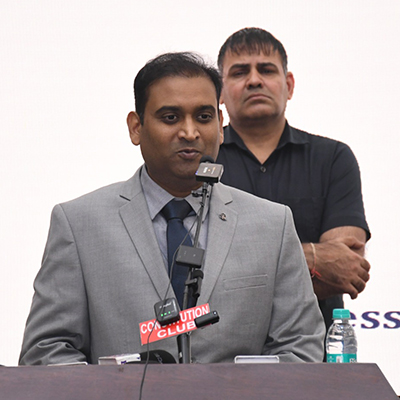
Sunil Kumar Singh’s public story sits between two environments that rarely meet in one technology narrative. Softa describes its founder as coming from a rural farming background in Bihar and as having spent more than two decades living and working in Finland and the wider Nordic region. Rural India offered direct exposure to infrastructure constraints, migration, linguistic diversity and local economies built around relationships. Finland offered a different experience of privacy, institutional restraint, engineering discipline and long-term public systems.
That combination appears central to the logic behind ZKTOR. The platform is neither a simple replication of a Western social network nor a product built only around national symbolism. Its stated design attempts to bring Nordic ideas of restraint and privacy into the social, cultural and economic conditions of India and South Asia. In a technology industry that often rewards theatrical launches, rapid fundraising and constant founder visibility, Singh has followed a quieter path. The description “the quiet storm of the technology world” fits his public positioning because the ambition behind Softa is considerably larger than its media spectacle.
Singh is attempting to connect social media, private communication, artificial intelligence, hyperlocal news, local commerce and advertising through a common governance philosophy. The ambition is disruptive even when the style remains restrained. Biography cannot substitute for evidence. The relevance of Singh’s story lies in the decisions that can be examined. Softa’s investor disclosures state that the company has raised no venture capital to date, received no government grants in India or Finland and remained debt-free, with operations funded through equity capital.
The company also says that it declined conventional dependence on foreign venture capital, institutional funding, government assistance and bank debt in order to protect long-term independence and avoid commercial pressure on system design. This is a genuine Atmanirbhar technology angle, but it should not be romanticized. Financial independence does not automatically guarantee good governance, technical strength or commercial success. It can preserve decision-making freedom, but it may also constrain infrastructure, recruitment and speed.
The strategic value is that Softa has not yet been required to redesign ZKTOR around an investor demand for maximum engagement, aggressive surveillance advertising or a rapid exit. Whether it can preserve that independence while expanding across South Asia will be one of the company’s most important tests.
From Indian social media app to Indian super app ecosystem
ZKTOR is Softa’s most visible product, but the company’s larger proposition depends on the relationship among several platforms. Subkuz is being developed as a hyperlocal news, information and diaspora platform. Ezowm is intended to provide a hyperlocal commerce layer connecting nearby businesses and demand. Hola AI is presented as a culturally grounded intelligence and safety system. ZHAN, the ZKTOR Hyperlocal Advertisement Network, is intended to connect advertisers with audiences through geography, language and context rather than intimate behavioral profiles.
Together, these products form the foundation of Softa’s Indian super app thesis. The phrase super app can be misleading when it suggests that every proposed function has already achieved maturity and commercial scale inside a single product. ZKTOR is more accurately described as the social foundation of a super app ecosystem in formation. That distinction strengthens credibility. The complete integrated future remains an ambition, but the structure is visible: social identity and communication through ZKTOR, local information through Subkuz, commerce through Ezowm, bounded intelligence through Hola AI and contextual monetization through ZHAN.
The central governance question is whether integration can occur without creating one all-knowing profile. A commerce platform may know what a user buys. A social network may know whom the user follows. A news platform may know what the user reads. An AI service may learn what the user asks. Combining those datasets could create extraordinary commercial power and an equally extraordinary concentration of risk.
Softa’s stated model is that each platform should retain purpose boundaries and that the wider ecosystem should not depend on centralized behavioral pooling across unrelated services. If the company can prove that separation technically and institutionally, it could offer a fundamentally different kind of Indian super app, one based on interoperability without total observation.
This is also where digital sovereignty becomes practical rather than rhetorical. The relevant questions concern where data is stored, who can access it, which law governs it, how long it is retained and whether information collected in one context can be used to train or monetize another service. ZKTOR’s digital swaraj argument will be strongest when these answers are published clearly and verified independently.
Hyperlocal employment and India’s district economy
The Softa ecosystem may achieve its largest economic impact outside India’s metropolitan startup economy. India’s districts contain millions of businesses that are economically active but not digitally organized. Shops, clinics, tutors, restaurants, transport providers, craftspeople, repair services, beauty professionals, home kitchens and local creators frequently depend on personal referrals, printed advertisements, local newspapers, radio, messaging groups and informal agents. Their market may be one neighborhood, one town or one district rather than the entire country.
Global digital advertising systems can reach these businesses, but their auction structures, interfaces and targeting models are not always designed around local language, trust and operational capacity. ZHAN’s proposed model is to organize advertising through verified business identity, geography, language and context without constructing invasive behavioral profiles.
Such a network could support small advertisers while creating a new category of local digital employment. Potential roles include campaign managers, business-verification partners, creator coordinators, content teams, language specialists, commerce facilitators and customer-support professionals.
Subkuz could provide distribution and possible revenue opportunities for district-level information and local reporting. Ezowm could connect nearby supply and demand. ZKTOR could give local businesses and creators a social identity through which trusted relationships develop. Hola AI could assist with language, safety and discovery across communities that remain poorly served by dominant global AI systems.
These employment effects are possibilities rather than realized numbers. They should not be described as guaranteed jobs. Their significance lies in the structure of the ecosystem. A digital platform cannot replace roads, education, finance or physical industry. It can, however, reduce the economic penalty of distance. If local businesses can find customers, regional creators can reach audiences and young people can perform digital operating roles from their districts, some forms of work can remain closer to home.
For women-led and home-based enterprises, the combination of privacy, controlled visibility, local advertising and commerce could be especially valuable. It could enable business participation without requiring the owner to expose unrelated parts of her private life. This is where privacy and economic growth stop appearing as opposing ideas. Privacy can become a condition for broader participation.
Digital colonialism, digital freedom and the Indian platform question
The expression digital colonialism is often used too broadly. It should not become a slogan suggesting that every foreign platform is exploitative or that domestic ownership automatically protects citizens. Its more useful meaning concerns structural dependency. A society may produce users, culture, language, attention, data and economic value while possessing limited influence over the systems that organize those resources.
The platform determines how visibility works, how data travels, how creators are paid, how businesses advertise and how public conversation is ranked. Users contribute social life and commercial value, but the governing architecture remains distant. India and South Asia have supplied enormous scale to the global social internet. They have also experienced limitations through fraud, gendered abuse, weak local-language moderation, imported social assumptions and advertising models that do not always understand district economies.
ZKTOR’s digital sovereignty case is that the region should become a producer of platform architecture, governance standards and digital institutions, not merely a market for systems designed elsewhere. This is the transition from digital dependency to digital freedom, and from digital consumption to digital swaraj. The argument is national in its ambition but must remain democratic in its execution. An Indian social media platform must still protect lawful expression, publish clear rules, resist improper pressure, secure personal data and treat users fairly. Digital swaraj cannot mean replacing foreign opacity with domestic opacity. It must mean stronger accountability to the citizens, communities and jurisdictions the system serves.
The potential future unicorn and the reasons credibility still matters
ZKTOR’s commercial opportunity is substantial. The platform has entered a publicly visible download band that demonstrates initial distribution. It is being tested across several South Asian markets and is connected to possible revenue streams in contextual advertising, local commerce, creator activity, hyperlocal information and AI-assisted services. A platform that converts trust into retention and regional relevance into revenue could build a competitive advantage that a generic social media clone would lack. This makes a future unicorn path plausible, but not inevitable.
A billion-dollar technology company cannot be built from headlines, downloads or architectural terminology alone. Investors will require independently verified active usage, retention, revenue quality, creator productivity, advertiser demand, manageable infrastructure costs, effective moderation and evidence that the wider ecosystem strengthens ZKTOR rather than distracting from it.
The product portfolio becomes an advantage only when sequencing remains disciplined. It may nevertheless become increasingly difficult to dismiss ZKTOR and Softa as a niche experiment if several conditions are fulfilled. The 500K+ download signal must convert into durable activity. Independent audits must validate critical privacy and security claims. Women and younger users must report safer experiences. ZHAN must demonstrate that contextual hyperlocal advertising can generate revenue without surveillance profiling. Subkuz and Ezowm must produce measurable information and commerce activity. Hola AI must preserve its stated boundaries as its capabilities expand.
If those elements align, Softa could occupy an unusual position in the technology landscape: an Indian technology company with regional reach, multiple reinforcing products, a privacy-led commercial model and no inherited dependence on surveillance economics. That is the basis on which ZKTOR may emerge as a possible future unicorn. It is an execution-dependent business thesis, not a guaranteed outcome.
The tests that will decide ZKTOR’s future
Softa states that independent security and privacy verification form part of its scaling roadmap. Such verification will be essential. Zero Knowledge Server Architecture, multi-layer encryption, No URL Media Architecture and jurisdiction-aware data controls are technical claims that require more than a company description. Independent specialists should examine access controls, encryption implementation, key management, retention, vulnerability response, insider risk, account recovery and the limits of media protection.
Child safety will require equal rigor. Privacy and encryption can protect users, but safety systems must also provide clear escalation routes for child sexual exploitation material, grooming, coercion and adult contact with minors. Hola AI’s safety functions should be subjected to red-team testing and public documentation, particularly as generative systems introduce new risks of synthetic sexual abuse, impersonation and fraud.
Advertising will be another decisive test. The recent Instagram controversy demonstrated that safety cannot begin only after harmful advertising has been purchased and distributed. ZHAN should establish advertiser verification, prohibited-content standards, payment traceability, campaign records and special controls for political, financial, health and child-related advertising. A searchable advertising-transparency repository could transform a stated principle into measurable evidence.
The final challenge will be governance under pressure. A platform can remain restrained while it is small. The real test arrives when growth slows, advertisers request deeper targeting, governments seek access, creators demand broader reach or future investors seek faster returns. ZKTOR’s architecture will matter most when violating its own principles becomes commercially tempting.
A super social media app that chooses to know less
ZKTOR’s importance does not lie in a claim that it has already solved every problem facing social media. The platform has not yet experienced the scale, time or independent scrutiny required to establish that conclusion. Its importance lies in the question it has placed at the center of its business: can a social network remain useful, engaging and commercially sustainable while deliberately limiting what it knows about the people who use it?
That question connects every part of the ZKTOR and Softa Technologies story. It connects No URL Media Architecture to women’s digital dignity and freedom. It connects limited behavioral profiling to the well-being of Gen Z and Gen Alpha. It connects jurisdiction-aware data systems to digital sovereignty. It connects contextual advertising to local businesses and employment. It connects financial independence to the ability to resist surveillance-driven monetization.
It also connects ZKTOR, Subkuz, Ezowm, Hola AI and ZHAN to the idea of an Indian super app ecosystem that integrates services without integrating every detail of human life into one commercial profile. The answer will not come from branding. It will come from independent audits, active-user retention, safety outcomes, revenue quality, women users’ experiences, creator economics and the company’s behavior when its stated principles become expensive.
Yet the early facts are sufficient to make the experiment consequential. Google Play places ZKTOR above the 500K download threshold. Softa reports half a million-plus beta users across India, Nepal, Sri Lanka and Bangladesh and plans further South Asian expansion. The company states that it has reached this stage without venture capital, government grants or debt. It has articulated an ecosystem linking Indian social media, secure communication, hyperlocal news, local commerce, artificial intelligence and contextual advertising.
If that architecture proves itself, ZKTOR could become more than an Indian alternative to established global platforms. It could become a South Asian model for the post-surveillance social internet, a trust-first super social media app shaped by privacy and data safety by design, a digital route into the economy for women and district businesses, a platform for Gen Z and Gen Alpha, and a serious expression of India’s ambition to build the institutions of the AI age. For years, the technology industry asked how much more a platform could discover about its users. ZKTOR is built around the harder question of how much a platform truly needs to know.